


Page 42 - Shark
P. 42
Horn sharks


                              Horn sharks get their name from the two spines
                              on their backs next to each dorsal fin, which look
                              like small horns. The sharks in this group are also
                              called bullheads because they have broad heads with
                              ridges above their eyes. The shape of the head and
                              the presence of an anal fin distinguish horn
          Practising the horn   sharks from spiny dogfish,
            makes perfect
                              which also have dorsal
        spines. There are nine species of horn shark.
        All are mostly less than 5 ft (1.5 m) long and are
        found in the Pacific and Indian Oceans, where
        they live on the seabed in shallow water. Horn
        sharks swim with slow beats of their tails and
        push themselves along the bottom with their
        pectoral fins. Port Jackson sharks can travel
        long distances, covering 500 miles (850 km)
        to visit their breeding sites. Because horn
        sharks are slow, scuba divers sometimes
        tease them by pulling their tails—they
        have been known to bite back. Sadly,                                                      Pelvic fin
        horn sharks are killed for their spines,
        used to make jewelry (pp. 60–61).

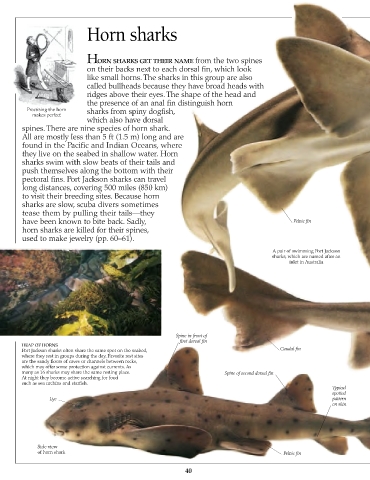
                                                                                           A pair of swimming Port Jackson
                                                                                           sharks, which are named after an
                                                                                                 inlet in Australia


                                                           Spine in front of
                                                            first dorsal fin
        Heap of Horns
        Port Jackson sharks often share the same spot on the seabed,                          Caudal fin
        where they rest in groups during the day. Favorite rest sites
        are the sandy floors of caves or channels between rocks,
        which may offer some protection against currents. As
        many as 16 sharks may share the same resting place.                Spine of second dorsal fin
        At night they become active searching for food
        such as sea urchins and starfish.
                                                                                                               Typical
                                                                                                               spotted
                 Eye                                                                                           pattern
                                                                                                               on skin


             Side view
             of horn shark                                                                     Pelvic fin

                                                              40

