


Page 70 - Shark
P. 70
Find out more


        Aquariums in many large cities, such as New York,
        Chicago, San Diego, Waikiki, London, and Sydney, have
        impressive shark displays, and most can provide comprehensive
        background information in the form of books and leaflets,
        photographs, lectures, and Web sites. Conservation organizations,
        such as the Shark Research Institute, also provide information
        about sharks and encourage young people to get involved. There
        are also programs where people can adopt a shark and find out
        about its progress.
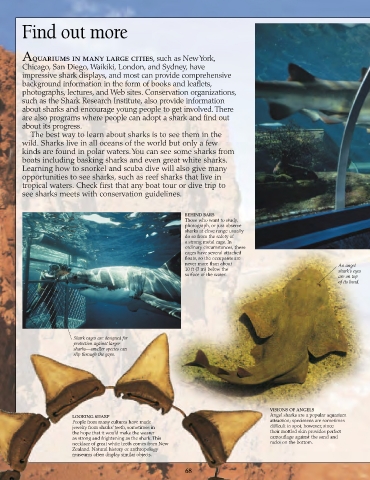
           The best way to learn about sharks is to see them in the
        wild. Sharks live in all oceans of the world but only a few
        kinds are found in polar waters. You can see some sharks from
        boats including basking sharks and even great white sharks.
        Learning how to snorkel and scuba dive will also give many
        opportunities to see sharks, such as reef sharks that live in
        tropical waters. Check first that any boat tour or dive trip to
        see sharks meets with conservation guidelines.


                                                              Behind Bars
                                                              Those who want to study,
                                                              photograph, or just observe
                                                              sharks at close range usually
                                                              do so from the safety of
                                                              a strong metal cage. In
                                                              ordinary circumstances, these
                                                              cages have several attached
                                                              floats, so the occupants are
                                                              never more than about                              An angel
                                                              10 ft (3 m) below the                              shark’s eyes
                                                              surface of the water.                              are on top
                                                                                                                 of its head.


                         Shark cages are designed for
                         protection against larger
                         sharks—smaller species can
                         slip through the gaps.


                                                                                          Visions of angeLs
                         Looking sharp                                                    Angel sharks are a popular aquarium
                         People from many cultures have made                              attraction; specimens are sometimes
                         jewelry from sharks’ teeth, sometimes in                         difficult to spot, however, since
                         the hope that it would make the wearer                           their mottled skin provides perfect
                         as strong and frightening as the shark. This                     camouflage against the sand and
                         necklace of great white teeth comes from New                     rocks on the bottom.
                         Zealand. Natural history or anthropology
                         museums often display similar objects.

                                                              68

