


Page 94 - Fish and Amphibians (Britannica Illustrated Science Library)
P. 94
90 PEOPLE, FISH, AND AMPHIBIANS F FISH AND AMPHIBIANS 91
Dramatic Decline PERU
STUBFOOT
TOAD
mphibians are considered by scientists to be the best natural indicators of an Atelopus
ecosystem's health. They are in a catastrophic decline: of all amphibian species, peruensis
A 7 percent are in critical condition, compared with 4 percent of mammals and 2 Status Critically endangered
percent of birds. Of the 5,700 known species of amphibians, 168 have disappeared, Cause Infectious disease
and 1 species in 3 is in danger of suffering the same fate. Most of this Range Peru
decline—a phenomenon comparable in proportion to the disappearance In the past 10 years, the population of
of the dinosaurs—has taken place during the past 20 years. COSTA RICAN VARIABLE this amphibian has declined by 80
HARLEQUIN TOAD
percent. The species is now critically
Atelopus varius
endangered. It seems that this animal is
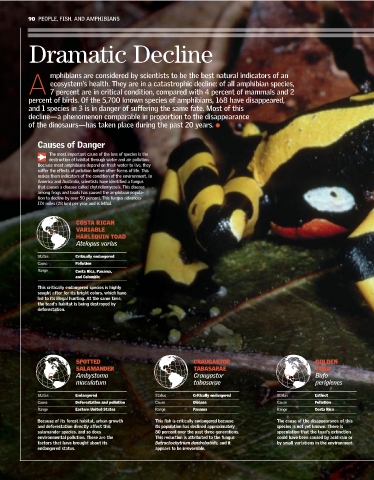
Causes of Danger disappearing because of a fatal
infectious disease that affects
The most important cause of the loss of species is the amphibians and that is caused by a
destruction of habitat through water and air pollution. fungus of the Chytridiomycota order.
Because most amphibians depend on fresh water to live, they
suffer the effects of pollution before other forms of life. This
makes them indicators of the condition of the environment. In
America and Australia, scientists have identified a fungus
that causes a disease called chytridiomycosis. This disease
among frogs and toads has caused the amphibian popula-
tion to decline by over 50 percent. This fungus advances
17.4 miles (28 km) per year and is lethal.
COSTA RICAN
VARIABLE KAISER'S
HARLEQUIN TOAD SPOTTED NEWT
Atelopus varius Neurergus
7% kaiseri
Status Critically endangered
Cause Pollution Status Critically endangered
Cause Illegal trade
Range Costa Rica, Panama,
and Colombia OF SPECIES ARE Range Iran
ENDANGERED.
This critically endangered species is highly This newt is endangered because the
sought after for its bright colors, which have range of its habitat is less than 60 miles
led to its illegal hunting. At the same time, (100 km). The entire population of the
the toad's habitat is being destroyed by species lives within an area of 4 square
deforestation. miles (10 sq km). Both the length and the
quality of its life are declining, in addition
to a decrease in the number of mature
specimens because of the illegal pet trade.
MEXICAN DUNN ROCKET
SPOTTED CRAUGASTOR GOLDEN AXOLOTL FROG
SALAMANDER TABASARAE TOAD Ambystoma Colostethus
Ambystoma Craugastor Bufo mexicanum dunni
maculatum tabasarae periglenes
Status Endangered Status Endangered
Status Endangered Status Critically endangered Status Extinct
Cause Predation Cause Chytridiomycosis
Cause Deforestation and pollution Cause Disease Cause Pollution
Range Mexico Range Venezuela
Range Eastern United States Range Panama Range Costa Rica
The only natural habitat of the axolotl is This frog is considered critically
Because of its forest habitat, urban growth This fish is critically endangered because The cause of the disappearance of this Lake Xochimilco in the state of Puebla, endangered because of a drastic, 80
and deforestation directly affect this its population has declined approximately species is not yet known. There is Mexico, where it is very scarce. Foreign percent decline in its population in the
salamander species, and so does 80 percent over the past three generations. speculation that the toad's extinction species such as koi and carassius, which past 10 years. The devastation of the
environmental pollution. These are the This reduction is attributed to the fungus could have been caused by acid rain or were introduced by humans, prey on species is attributed to
factors that have brought about its Batrachochytrium dendrobatidis, and it by small variations in the environment. axolotl eggs. chytridiomycosis.
endangered status. appears to be irreversible.

