


Page 29 - BBC Wildlife Volume 36 #12
P. 29
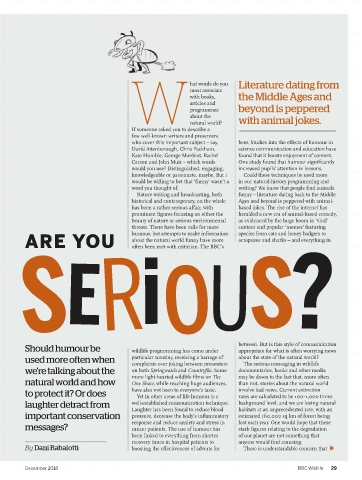
hat words do you      Literaturedatingfrom
                                                                                         most associate
                                                                                         with books,           theMiddleAgesand
                                                                                         articles and
                                                                                         programmes            beyondispeppered
                                                                                         about the
                                                             W natural world?                                  withanimaljokes.
                                                              If someone asked you to describe a
                                                              few well-known writers and presenters
                                                              who cover this important subject – say,          beer. Studies into the effects of humour in
                                                              David Attenborough, Chris Packham,               science communication and education have
                                                              Kate Humble, George Monbiot, Rachel              found that it boosts enjoyment of content.
                                                              Carson and John Muir – which words               One study found that humour significantly
                                                              would you use? Distinguished, engaging,          increased pupils’ attention in lessons.
                                                              knowledgeable or passionate, maybe. But I          Could these techniques be used more
                                                              would be willing to bet that ‘funny’ wasn’t a    in our natural-history programming and
                                                              word you thought of.                             writing? We know that people find animals
                                                                Nature writing and broadcasting, both          funny – literature dating back to the Middle
                                                              historical and contemporary, on the whole        Ages and beyond is peppered with animal-
                                                              has been a rather serious affair, with           based jokes. The rise of the internet has
                                                              prominent figures focusing on either the          heralded a new era of animal-based comedy,
                                                              beauty of nature or serious environmental        as evidenced by the huge boom in ‘viral’
                                                              threats. There have been calls for more          content and popular ‘memes’ featuring
                                                              humour, but attempts to make information         species from cats and honey badgers to
             ARE                  YOU                         about the natural world funny have more          octopuses and sharks – and everything in
                                                              often been met with criticism. The BBC’s

                                                                             OUS?
           SERi


                                                                                                               between. But is this style of communication
             Should humour be                                 wildlife programming has come under              appropriate for what is often worrying news

             used more oten when                              particular scrutiny, receiving a barrage of      about the state of the natural world?
                                                              complaints over joking between presenters          The serious messaging in wildlife
             we're talking about the                          on both Springwatch and Countryfile. Some         documentaries, books and other media
                                                              more light-hearted wildlife films on The          may be down to the fact that, more often
             natural world and how                            One Show, while reaching huge audiences,         than not, stories about the natural world

             to protect it? Or does                           have also not been to everyone’s taste.          involve bad news. Current extinction
                                                                Yet in other areas of life humour is a
                                                                                                               rates are calculated to be 100–1,000 times
             laughter detract from                            well-established communication technique.        background level, and we are losing natural
                                                              Laughter has been found to reduce blood          habitats at an unprecedented rate, with an
             important conservation                           pressure, decrease the body’s inflammatory        estimated 160,000 sq km of forest being
                                                              response and reduce anxiety and stress in        lost each year. One would hope that these
             messages?                                        cancer patients. The use of humour has           stark figures relating to the degradation

                                                              been linked to everything from shorter           of our planet are not something that
                                                              recovery times in hospital patients to           anyone would find amusing.
             By Dani Rabaiotti                                boosting the effectiveness of adverts for          There is understandable concern that


             December 2018                                                                                                                BBC Wildlife    29

