


Page 31 - BBC Wildlife Volume 36 #12
P. 31
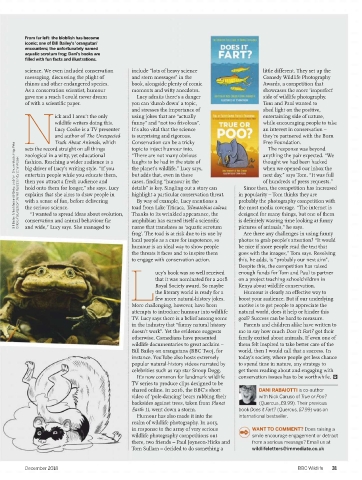
From far left: the blobfish has become
iconic; one of Bill Bailey's 'orangutan'
encounters; the unfortunately named
aquatic scrotum frog; Dani's books are
filled with fun facts and illustrations.
science. We even included conservation include “lots of heavy science little different. They set up the
messaging, discussing the plight of and stern messages” in the Comedy Wildlife Photography
rhinos and other endangered species. book, alongside plenty of comic Awards, a competition that
As a conservation scientist, humour moments and witty anecdotes. showcases the more ‘imperfect’
gave me a reach I could never dream Lucy admits there’s a danger side of wildlife photography.
of with a scientific paper. you can ‘dumb down’ a topic, Tom and Paul wanted to
and stresses the importance of shed light on the positive,
ick and I aren’t the only using jokes that are “actually entertaining side of nature,
wildlife writers doing this. funny” and “not too frivolous”. while encouraging people to take
Lucy Cooke is a TV presenter It’s also vital that the science an interest in conservation –
and author of The Unexpected is surprising and rigorous. they're partnered with the Born
N Truth About Animals, which Conservation can be a tricky Free Foundation.
sets the record straight on all things topic to inject humour into. The response was beyond
zoological in a witty, yet educational “There are not many obvious anything the pair expected. “We
Oxford/naturepl.com; ferret illustration by Ethan Kocak Bill Bailey: Mike Marsland/Getty; blobfish: Shutterstock; frog: Pete entertain people while you educate them, but adds that, even in these in popularity – Tom thinks they are
fashion. Reaching a wider audience is a
thought we had been hacked
laughs to be had in the state of
when we opened our inbox the
the planet’s wildlife,” Lucy says,
big driver of Lucy’s writing style. “If you
next day,” says Tom. “It was full
cases, finding “humour in the
of hundreds of press requests.”
then you attract a fresh audience and
hold onto them for longer,” she says. Lucy
Since then, the competition has increased
details” is key. Singling out a story can
highlight a particular conservation threat.
explains that she aims to draw people in
By way of example, Lucy mentions a
probably the photography competition with
with a sense of fun, before delivering
the serious science.
the most media coverage. “The internet is
toad from Lake Titicaca, Telmatobius culeus.
Thanks to its wrinkled appearance, the
“I wanted to spread ideas about evolution,
is definitely wasting time looking at funny
conservation and animal behaviour far
amphibian has earned itself a scientific
and wide,” Lucy says. She managed to
name that translates as ‘aquatic scrotum
pictures of animals,” he says.
Are there any challenges in using funny
frog’. The toad is at risk due to its use by designed for many things, but one of them
local people as a cure for impotence, so photos to grab people’s attention? “It would
humour is an ideal way to show people be nice if more people read the text that
the threats it faces and to inspire them goes with the images,” Tom says. Resolving
to engage with conservation action. this, he adds, is “probably our next aim”.
Despite this, the competition has raised
ucy’s book was so well received enough funds for Tom and Paul to partner
that it was nominated for a 2018 on a project teaching schoolchildren in
Royal Society award. So maybe Kenya about wildlife conservation.
the literary world is ready for a Humour is clearly an effective way to
L few more natural-history jokes. boost your audience. But if our underlying
More challenging, however, have been motive is to get people to appreciate the
attempts to introduce humour into wildlife natural world, does it help or hinder this
TV. Lucy says there is a belief among some goal? Success can be hard to measure.
in the industry that “funny natural history Parents and children alike have written to
doesn’t work”. Yet the evidence suggests me to say how much Does It Fart? got their
otherwise. Comedians have presented family excited about animals. If even one of
wildlife documentaries to great acclaim – them felt inspired to take better care of the
Bill Bailey on orangutans (BBC Two), for world, then I would call that a success. In
instance. YouTube also hosts extremely today’s society, where people get less chance
popular natural-history videos narrated by to spend time in nature, any strategy to
celebrities such as rap star Snoop Dogg. get them reading about and engaging with
It’s now common for landmark wildlife conservation issues has to be worthwhile.
TV series to produce clips designed to be
shared online. In 2016, the BBC’s short DANI RABAIOTTI is co-author
video of ‘pole-dancing’ bears rubbing their with Nick Caruso of True or Poo?
backsides against trees, taken from Planet (Quercus, £9.99). Their previous
Earth II, went down a storm. book Does it Fart? (Quercus, £7.99) was an
Humour has also made it into the international bestseller.
realm of wildlife photography. In 2015,
in response to the array of very serious WANT TO COMMENT? Does raising a
wildlife photography competitions out smile encourage engagement or detract
there, two friends – Paul Joynson-Hicks and from a serious message? Email us at
Tom Sullam – decided to do something a wildlifeletters@immediate.co.uk
December 2018 BBC Wildlife 31

