


Page 111 - The Dinosaur Book and Other Wonders of the Prehistoric World (DK-Smithsonian)
P. 111
Struthiomimus


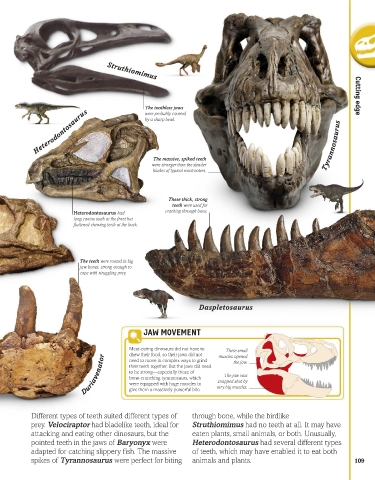
                                                The toothless jaws                                                   Cutting edge
             Heterodontosaurus                  by a sharp beak.
                                                were probably covered


                                                   The massive, spiked teeth                               Tyrannosaurus
                                                   were stronger than the slender
                                                   blades of typical meat-eaters.


                                                        These thick, strong
                                                         teeth were used for
                                                       cracking through bone.
                         Heterodontosaurus had
                         long canine teeth at the front but
                         flattened chewing teeth at the back.


                           The teeth were rooted in big
                           jaw bones, strong enough to
                           cope with struggling prey.


                                                                  Daspletosaurus


                                                JAW MOVEMENT

                                           Meat-eating dinosaurs did not have to   These small
                                           chew their food, so their jaws did not   muscles opened
                            Duriavenator   their teeth together. But the jaws did need   very big muscles.
                                           need to move in complex ways to grind
                                                                             the jaw.
                                           to be strong—especially those of
                                                                          The jaw was
                                           bone-crunching tyrannosaurs, which
                                                                        snapped shut by
                                           were equipped with huge muscles to
                                           give them a massively powerful bite.

           Different types of teeth suited different types of   through bone, while the birdlike
           prey. Velociraptor had bladelike teeth, ideal for    Struthiomimus had no teeth at all. It may have
           attacking and eating other dinosaurs, but the        eaten plants, small animals, or both. Unusually,
           pointed teeth in the jaws of Baryonyx were           Heterodontosaurus had several different types
           adapted for catching slippery fish. The massive      of teeth, which may have enabled it to eat both
           spikes of Tyrannosaurus were perfect for biting      animals and plants.                                  109


   US_108-109_Cutting_edge.indd   109                                                                            10/04/18   3:34 PM

