


Page 135 - The Dinosaur Book and Other Wonders of the Prehistoric World (DK-Smithsonian)
P. 135
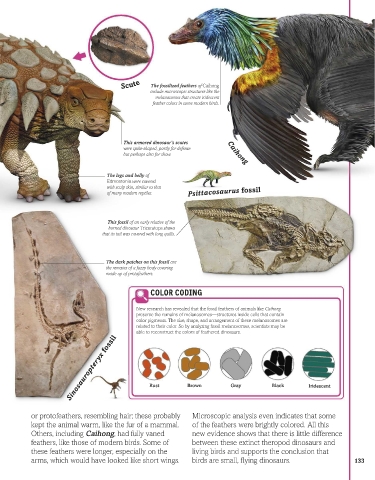
Scute    The fossilized feathers of Caihong
                                                  include microscopic structures like the
                                                    melanosomes that create iridescent
                                                   feather colors in some modern birds.


                                         This armored dinosaur’s scutes
                                         were spike-shaped, partly for defense   Caihong
                                         but perhaps also for show.


                                    The legs and belly of
                                    Edmontonia were covered
                                    with scaly skin, similar to that
                                    of many modern reptiles.  Psittacosaurus fossil


                                    This fossil of an early relative of the
                                    horned dinosaur Triceratops shows
                                  that its tail was covered with long quills.


                                    The dark patches on this fossil are
                                    the remains of a fuzzy body covering
                                    made up of protofeathers.


                                                  COLOR CODING

                                              New research has revealed that the fossil feathers of animals like Caihong
                                              preserve the remains of melanosomes—structures inside cells that contain
                                              color pigments. The size, shape, and arrangement of these melanosomes are
                                              related to their color. So by analyzing fossil melanosomes, scientists may be
                                              able to reconstruct the colors of feathered dinosaurs.
                        Sinosauropteryx fossil    Rust        Brown         Gray          Black       Iridescent


           or protofeathers, resembling hair; these probably    Microscopic analysis even indicates that some
           kept the animal warm, like the fur of a mammal.      of the feathers were brightly colored. All this
           Others, including Caihong, had fully vaned           new evidence shows that there is little difference
           feathers, like those of modern birds. Some of        between these extinct theropod dinosaurs and
           these feathers were longer, especially on the        living birds and supports the conclusion that
           arms, which would have looked like short wings.      birds are small, flying dinosaurs.                   133


   US_132-133_Skins_Scales_and_Feathers.indd   133                                                               10/04/18   4:00 PM

