


Page 152 - The Dinosaur Book and Other Wonders of the Prehistoric World (DK-Smithsonian)
P. 152
Later pterosaurs


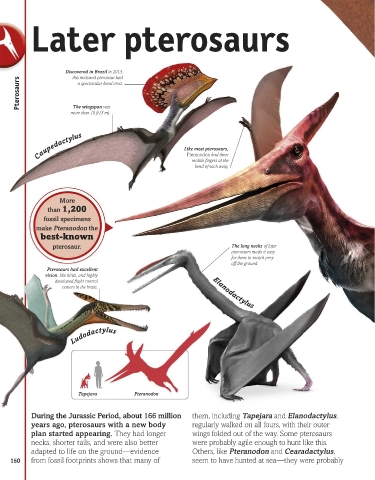
                      Discovered in Brazil in 2013,
                         this midsized pterosaur had
       Pterosaurs         a spectacular head crest.


                         The wingspan was
                        more than 10 ft (3 m).


             Caupedactylus                                   Like most pterosaurs,


                                                              Pteranodon had three
                                                                mobile fingers at the
                                                                 bend of each wing.


                     More
                 than 1,200
               fossil specimens
             make Pteranodon the
              best-known
                  pterosaur.                                                 The long necks of later
                                                                             pterosaurs made it easy
                                                                             for them to snatch prey
                                                                             off the ground.
                Pterosaurs had excellent
                vision, like birds, and highly
                   developed flight control
                     centers in the brain.                             Elanodactylus


                         Ludodactylus


                           Tapejara          Pteranodon


           During the Jurassic Period, about 166 million        them, including Tapejara and Elanodactylus,
           years ago, pterosaurs with a new body                regularly walked on all fours, with their outer
           plan started appearing. They had longer              wings folded out of the way. Some pterosaurs
           necks, shorter tails, and were also better           were probably agile enough to hunt like this.
           adapted to life on the ground—evidence               Others, like Pteranodon and Cearadactylus,
    150    from fossil footprints shows that many of            seem to have hunted at sea—they were probably


   US_150-151_Later_Pterosaurs.indd   150                                                                        10/04/18   3:35 PM

