


Page 174 - The Dinosaur Book and Other Wonders of the Prehistoric World (DK-Smithsonian)
P. 174
Trapped in amber


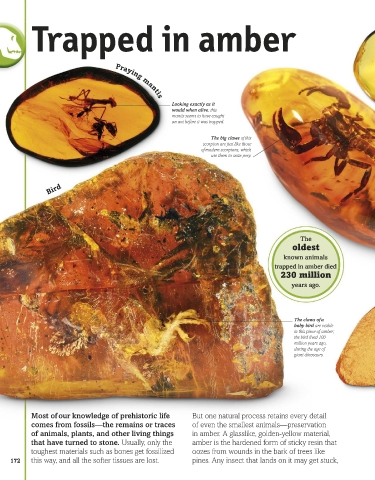
                                       Praying mantis
                                                         Looking exactly as it
                                                         would when alive, this
                                                         mantis seems to have caught
                                                         an ant before it was trapped.


                                                                      The big claws of this
                                                                   scorpion are just like those
                                                                   of modern scorpions, which
                                                                      use them to seize prey.


                 Bird


                                                                                                   The
                                                                                                oldest

                                                                                              known animals
                                                                                           trapped in amber died
                                                                                             230 million
                                                                                                years ago.


                                                                                                 The claws of a
                                                                                                 baby bird are visible
                                                                                                 in this piece of amber;
                                                                                                 the bird lived 100
                                                                                                 million years ago,
                                                                                                 during the age of
                                                                                                 giant dinosaurs.


           Most of our knowledge of prehistoric life            But one natural process retains every detail
           comes from fossils—the remains or traces             of even the smallest animals—preservation
           of animals, plants, and other living things          in amber. A glasslike, golden-yellow material,
           that have turned to stone. Usually, only the         amber is the hardened form of sticky resin that
           toughest materials such as bones get fossilized      oozes from wounds in the bark of trees like
    172    this way, and all the softer tissues are lost.       pines. Any insect that lands on it may get stuck,


   US_172-173_Trapped_in_amber.indd   172                                                                        10/04/18   3:35 PM

