


Page 173 - The Dinosaur Book and Other Wonders of the Prehistoric World (DK-Smithsonian)
P. 173
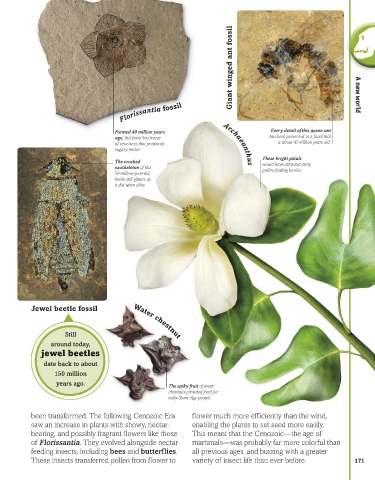
Giant winged ant fossil


                                        Florissantia fossil                                                          A new world


                                       Formed 49 million years                           Every detail of this queen ant
                                       ago, this fossil has traces                       has been preserved in a fossil that
                                       of structures that produced        Archaeanthus      is about 47 million years old.
                                       sugary nectar.
                                                                                       These bright petals
                                       The crushed                                     would have attracted early
                                       exoskeleton of this                             pollen-feeding beetles.
                                       50-million-year-old
                                       beetle still glitters as
                                       it did when alive.


           Jewel beetle fossil


                      Still                  Water chestnut
                  around today,
               jewel beetles
               date back to about
                   150 million
                   years ago.                           The spiky fruit of water
                                                        chestnuts provided food for
                                                        early Stone Age people.


           been transformed. The following Cenozoic Era         flower much more efficiently than the wind,
           saw an increase in plants with showy, nectar-        enabling the plants to set seed more easily.
           bearing, and possibly fragrant flowers like those    This meant that the Cenozoic—the age of
           of Florissantia. They evolved alongside nectar-      mammals—was probably far more colorful than
           feeding insects, including bees and butterflies.     all previous ages, and buzzing with a greater
           These insects transferred pollen from flower to      variety of insect life than ever before.             171


   US_170-171_A_new_world.indd   171                                                                             10/04/18   3:35 PM

