


Page 186 - The Dinosaur Book and Other Wonders of the Prehistoric World (DK-Smithsonian)
P. 186
Horns and antlers


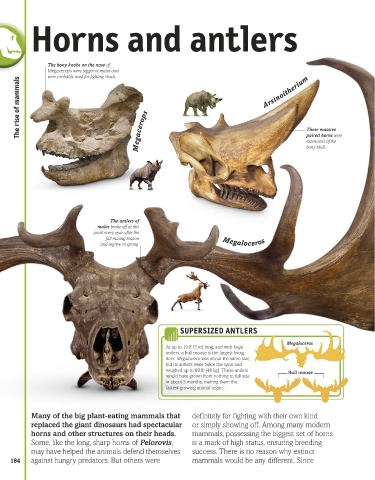
                 The bony knobs on the nose of
                 Megacerops were bigger in males and
                 were probably used for fighting rivals.                               Arsinoitherium
       The rise of mammals                    Megacerops                                             These massive


                                                                                                     paired horns were
                                                                                                     extensions of the
                                                                                                     bony skull.


                                     The antlers of
                                 males broke off at this
                                point every year after the
                                    fall mating season                    Megaloceros
                                  and regrew in spring.


                                                            SUPERSIZED ANTLERS

                                                                                               Megaloceros
                                                       At up to 10 ft (3 m) long, and with huge
                                                       antlers, a bull moose is the largest living
                                                       deer. Megaloceros was about the same size,
                                                       but its antlers were twice the span and
                                                       weighed up to 88 lb (40 kg). These antlers   Bull moose
                                                       would have grown from nothing to full size
                                                       in about 5 months, making them the
                                                       fastest-growing animal organ.


           Many of the big plant-eating mammals that            definitely for fighting with their own kind
           replaced the giant dinosaurs had spectacular         or simply showing off. Among many modern
           horns and other structures on their heads.           mammals, possessing the biggest set of horns
           Some, like the long, sharp horns of Pelorovis,       is a mark of high status, ensuring breeding
           may have helped the animals defend themselves        success. There is no reason why extinct
    184    against hungry predators. But others were            mammals would be any different. Since


   US_184-185_Horns_and_antlers.indd   184                                                                       10/04/18   3:35 PM

