


Page 191 - The Dinosaur Book and Other Wonders of the Prehistoric World (DK-Smithsonian)
P. 191
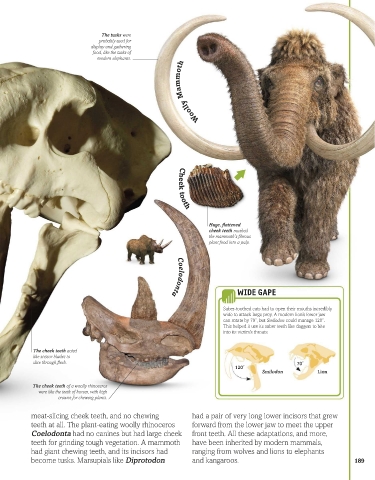
The tusks were
                                 probably used for
                               display and gathering
                               food, like the tusks of
                                 modern elephants.
                                                                           Woolly Mammoth


                                                            Cheek tooth

                                                                     Huge, flattened
                                                                     cheek teeth mashed
                                                                     the mammoth’s fibrous
                                                                     plant food into a pulp.


                                                                               WIDE GAPE

                                                                       Coelodonta
                                                                          Saber-toothed cats had to open their mouths incredibly
                                                                          wide to attack large prey. A modern lion’s lower jaw
                                                                          can rotate by 70˚, but Smilodon could manage 120˚.
                                                                          This helped it use its saber teeth like daggers to bite
                                                                          into its victim’s throats.


            The cheek teeth acted
            like scissor blades to
            slice through flesh.                                                                  70˚
                                                                              120˚
                                                                                       Smilodon          Lion

            The cheek teeth of a woolly rhinoceros
              were like the teeth of horses, with high
                    crowns for chewing plants.


           meat-slicing cheek teeth, and no chewing             had a pair of very long lower incisors that grew
           teeth at all. The plant-eating woolly rhinoceros     forward from the lower jaw to meet the upper
           Coelodonta had no canines but had large cheek        front teeth. All these adaptations, and more,
           teeth for grinding tough vegetation. A mammoth       have been inherited by modern mammals,
           had giant chewing teeth, and its incisors had        ranging from wolves and lions to elephants
           become tusks. Marsupials like Diprotodon             and kangaroos.                                       189


   US_188-189_Mammal_teeth.indd   189                                                                            26/04/18   3:30 PM

