


Page 187 - The Dinosaur Book and Other Wonders of the Prehistoric World (DK-Smithsonian)
P. 187
The colossal nose horn of
                                                                                      Elasmotherium was made
                                                                                      of keratin, like human fingernails.
                                                    Synthetoceras

                       This antelope-                                             Elasmotherium
                       like animal had
                       a Y-shaped horn
                       on its nose, as
                       well as two horns
                       above its eyes.


           The antlers were
             made of bone
            and were covered
             with velvety skin
                 when they
              were growing.
                                            The name
                                        Megaloceros
                                         means “great
                                            horn.”                                The bony horns—each up
                                                                                  to 3 ft (1 m) long—would have
                                                                                  been extended by sheaths
                                                                                  of tough keratin.


                                                          One of the largest wild
                                                          cattle that ever existed,
                                                       Pelorovis lived in Africa until
                                                          about 12,000 years ago.


                                                                                                             Pelorovis


                                                                  Uintatherium
               The skull of a male
               Uintatherium bore
               six big, bony knobs.


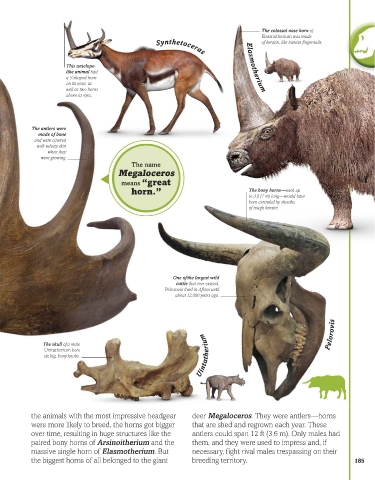
           the animals with the most impressive headgear        deer Megaloceros. They were antlers—horns
           were more likely to breed, the horns got bigger      that are shed and regrown each year. These
           over time, resulting in huge structures like the     antlers could span 12 ft (3.6 m). Only males had
           paired bony horns of Arsinoitherium and the          them, and they were used to impress and, if
           massive single horn of Elasmotherium. But            necessary, fight rival males trespassing on their
           the biggest horns of all belonged to the giant       breeding territory.                                  185


   US_184-185_Horns_and_antlers.indd   185                                                                       10/04/18   3:35 PM

