


Page 110 - (DK Eyewitness) Travel Guide: Japan
P. 110
108 T OK Y O AREA B Y AREA
SHOPPING IN TOKYO
You can buy almost anything you want in do specialize in certain types of shops.
Tokyo, from a traditional kokeshi (cylindrical Ginza is the place for traditional, upscale
wooden doll) to a Chanel hand bag or an stores, while Shinjuku mixes huge arcades
up-to-the-minute video game. Tokyo-ites with electronics shops stacked high with
love shopping and, budget permitting, the the latest innovations. Harajuku and
city is a paradise for browsing and buying, Minami-Aoyama are the areas for the
with its huge department stores, informal funkiest fashions and designs; the older
street markets, and fascinating one-of-a- quarters around Ueno and Asakusa offer
kind shops. Although half the joy of more traditional Japanese crafts. For
shopping here is the amazing contrasts general information on shopping in
that can be found side-by-side, some areas Japan, see pages 340–45.
Department Stores
Tokyo’s most famous store; the Aquacity and Wanza Ariake
Department stores grew out of main Mitsukoshi store is in Nihon (see p107) are similar. The
Edoperiod mercantile houses. bashi, with other branches in lower floors of Tokyo Opera
Customers would sit on tatami Ikebukuro, Shinjuku, and Ebisu. City (see p104) also have
mats and describe what they In Ginza Matsuya is aimed at a restaurants and shops.
wanted, then staff would bring younger, yuppie crowd. Shinjuku’s
out the goods for their perusal. department stores were given
After the 1923 earthquake, a boost with the opening of
newly built stores allowed Takashimaya, which has been
customers wearing shoes inside hugely suc cessful. Tokyu Hands,
for the first time, revolutionizing next door, is a fun cornucopia of
shopping. Since the collapse of household wares, and items for
the “bubble” economy in about the craft enthusiast. There are
1990, the opulence of Tokyo’s other branches in Ikebukuro
depart ment stores has been and Shibuya (see pp100–101). For
more muted and prices lower, a heavy dose of youth culture,
but they continue to offer a try Marui Jam in Shibuya.
huge variety and immaculate Isetan in Shinjuku is a trend
service. Basements are usually setter for department stores
super markets, where free in Tokyo, and is known for its
samples are handed out. Top artistic window displays. It has
floors are often filled with a separate building dedicated to
restaurants, both Western and men’s fashion, accessed by a pas
Japanese, plus an art gallery and sageway from the main building.
some times a museum, too.
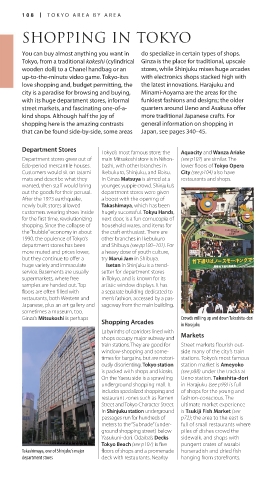
Ginza’s Mitsukoshi is perhaps Crowds milling up and down Takeshita-dori
Shopping Arcades in Harajuku
Labyrinths of corridors lined with
shops occupy major subway and Markets
train stations. They are good for Street markets flourish out
windowshopping and some side many of the city’s train
times for bargains, but are notori stations. Tokyo’s most famous
ously dis orienting. Tokyo station station market is Ameyoko
is packed with shops and kiosks. (see p88) under the tracks at
On the Yaesu side is a sprawling Ueno station. Takeshita-dori
underground shopping mall. It in Harajuku (see p99) is full
includes specialized shopping and of shops for the young and
restaurant zones such as Ramen fashionconscious. The
Street and Tokyo Character Street. ultimate market experience
In Shinjuku station underground is Tsukiji Fish Market (see
passages run for hundreds of p72); the area to the east is
meters to the “Subnade” (under full of small restaurants where
ground shop ping street) below piles of dishes crowd the
Yasukunidori. Odaiba’s Decks sidewalk, and shops with
Tokyo Beach (see p107) is five pungent crates of wasabi
Takashimaya, one of Shinjuku’s major floors of shops and a promenade horseradish and dried fish
department stores deck with restaurants. Nearby hanging from storefronts.
108-109_EW_Japan.indd 108 08/08/16 2:53 pm

