


Page 323 - (DK Eyewitness) Travel Guide: Japan
P. 323
WHERE T O EA T AND DRINK 321
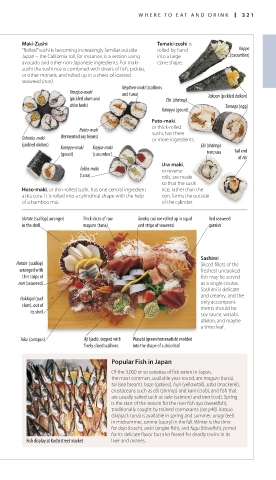
Maki-Zushi Temaki-zushi is
“Rolled” sushi is becoming increasingly familiar outside rolled by hand Kappa
Japan – the California roll, for instance, is a version using into a large (cucumber)
avocado and other non-Japanese ingredients. For maki- cone shape.
zushi the sushi rice is combined with slivers of fish, pickles,
or other morsels, and rolled up in a sheet of toasted
seaweed (nori).
Negitoro-maki (scallions
Umejiso-maki and tuna)
(pickled plum and Ebi (shrimp) Takuan (pickled daikon)
shiso herb) Tamago (egg)
Kampyo (gourd)
Futo-maki,
or thick-rolled
Natto-maki sushi, has three
Oshinko-maki (fermented soy beans) or more ingredients.
(pickled daikon) Kampyo-maki Kappa-maki Ebi (shrimp)
(gourd) (cucumber) tempura Tail end
of ebi
Ura-maki,
Tekka-maki or reverse
(tuna) rolls, are made
so that the sushi
Hoso-maki, or thin-rolled sushi, has one central ingredient rice, rather than the
at its core. It is rolled into a cylindri cal shape with the help nori, forms the outside
of a bamboo mat. of the cylinder.
Hotate (scallop) arranged Thick slices of raw Tarako, cod roe rolled up in squid Red seaweed
in the shell maguro (tuna) and strips of seaweed garnish
Sashimi
Hotate (scallop) Sliced fillets of the
arranged with freshest uncooked
thin strips of fish may be served
nori (seaweed) as a single course.
Sashimi is delicate
and creamy, and the
Hokkigai (surf only accompan i-
clam), out of ments should be
its shell soy sauce, wasabi,
daikon, and maybe
a shiso leaf.
Tako (octopus) Aji (jack), topped with Wasabi (green horseradish) molded
finely sliced scallions into the shape of a shiso leaf
Popular Fish in Japan
Of the 3,000 or so varieties of fish eaten in Japan,
the most common, available year-round, are maguro (tuna),
tai (sea bream), haze (gobies), buri (yellowtail), saba (mack erel),
crustaceans such as ebi (shrimp) and kani (crab), and fish that
are usually salted such as sake (salmon) and tara (cod). Spring
is the start of the season for the river fish ayu (sweet fish),
traditionally caught by trained cormorants (see p48). Katsuo
(skipjack tuna) is available in spring and summer, unagi (eel)
in midsummer, sanma (saury) in the fall. Winter is the time
for dojo (loach), anko (angler fish), and fugu (blowfish), prized
for its delicate flavor but also feared for deadly toxins in its
Fish display at Kochi street market liver and ovaries.
320-321_EW_Japan.indd 321 08/08/16 3:09 pm

