


Page 320 - (DK Eyewitness) Travel Guide: Japan
P. 320
318 TR A VELERS ’ NEEDS
The Japanese Meal
Along with the indispensable rice and miso soup (made
from fermented soy bean paste), a Japanese meal usually
consists of a variety of smaller dishes which are designed
to complement each other. Plain ingredients are often
given strong flavors, such as a bowl of rice topped off with
an umeboshi (sour plum) or pickled ginger, or tofu that has
been marinated in a strong, vinegary sauce. Two liquid
ingredients central to most Japanese dishes are dashi, a
light stock made from giant kelp (konbu) and dried skipjack
tuna shavings, and Japanese soy sauce (shoyu). Firm tofu
placed to the left and the soup fish, often salted salmon or
to the right of the sitter. Not mackerel. Other dishes may
only is it common for there to include dried seaweed, omelet,
be variations in miso soup from and a small portion of pickles.
region to region, individual Natto is a dish made out of
families tend to have their own fermented soy beans and it
idiosyncratic method of is a much-loved breakfast
producing this most Japanese dish among health-conscious
of soups. Japanese. Usually eaten with
The basic rice and soup are rice, it is famous not only for
accompanied by a range of being extremely healthy, but
side dishes, of which the most also for the noxious smell that
common is a portion of grilled it gives off.
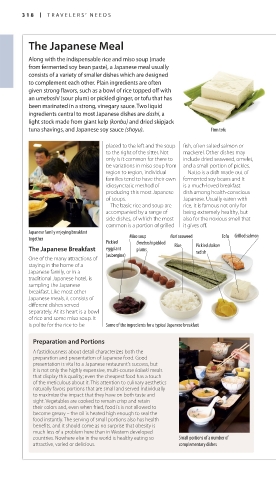
Japanese family enjoying breakfast Grilled salmon
together Miso soup Nori seaweed Tofu
Pickled Umeboshi pickled
The Japanese Breakfast eggplant plums Rice Pickled daikon
radish
(aubergine)
One of the many attractions of
staying in the home of a
Japanese family, or in a
traditional Japanese hotel, is
sampling the Japanese
breakfast. Like most other
Japanese meals, it consists of
different dishes served
separately. At its heart is a bowl
of rice and some miso soup. It
is polite for the rice to be Some of the ingredients for a typical Japanese breakfast
Preparation and Portions
A fastidiousness about detail characterizes both the
preparation and presentation of Japanese food. Good
presentation is vital to a Japanese restaurant’s success, but
it is not only the highly expensive, multi-course kaiseki meals
that display this quality; even the cheapest food has a touch
of the meticulous about it. This attention to culinary aesthetics
naturally favors portions that are small and served individually
to maximize the impact that they have on both taste and
sight. Vegetables are cooked to remain crisp and retain
their colors and, even when fried, food is is not allowed to
become greasy – the oil is heated high enough to seal the
food instantly. The serving of small portions also has health
benefits, and it should come as no surprise that obesity is
much less of a problem here than in Western developed
countries. Nowhere else in the world is healthy eating so Small portions of a number of
attractive, varied or delicious. complementary dishes
318-319_EW_Japan.indd 318 08/08/16 3:09 pm
Eyewitness Travel LAYERS PRINTED:
Feature template “UK” LAYER
(SourceReport v1.3)
Date 7th January 2013
Size 125mm x 217mm

