


Page 342 - (DK Eyewitness) Travel Guide: Japan
P. 342
340 TR A VELERS ’ NEEDS
SHOPPING IN JAPAN
Shopping in Japan is an amazing experience. the general background noise. Japan is
With as many traditional arts and crafts no longer the most expensive country
products as contemporary and imported in the world, but still the price of certain
items, there is the most fascinating choice commodities may shock. Some goods
imagin able. Equally interesting is the range made in Japan, such as cameras and other
of shops – from glitzy department stores electronic items, are actually cheaper to
and huge shoppings malls to roadside stalls buy abroad. On the other hand, it is possible
and tiny craft workshops. Within 24 hours, to buy original and unusual souvenirs
the constant greetings of “irasshaimase” surprisingly inexpensively. For details
(“Welcome!”) on enter ing a shop are either on shopping in Tokyo, see pages 108–11;
driving visitors crazy or have become part of for Kyoto, see pages 184–7.
Prices and Sales Tax the tax, although this should
In department stores and change in March 2017.
boutiques, and in inner-city In the booming 1980s, all
areas, prices are nearly always prices were fixed, but in more
marked in Arabic numerals. recessive times, the emphasis
In local shops and super- is on discount shopping, with
markets, and in areas where stores lowering prices to match
non-Japanese are few and strong competition. Flea
far between, prices may be markets and antique fairs are
written only in kanji charac ters. the only places where haggling
When shopkeepers are is accepted as an integral part
unable to make themselves of the proceedings.
understood verbally to visitors,
they may type the numbers on
a calculator, write them down, How to Pay
or sign with their fingers. If The Japanese yen continues
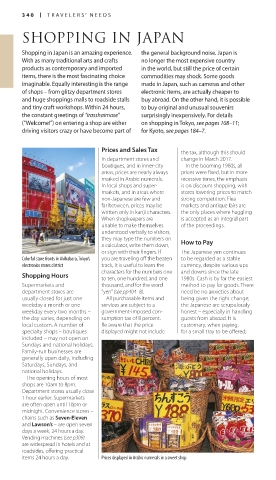
Colorful store fronts in Akihabara, Tokyo’s you are traveling off the beaten to be regarded as a stable
electronics stores district track, it is useful to learn the currency, despite various ups
characters for the numbers one and downs since the late
Shopping Hours to ten, one hundred, and one 1980s. Cash is by far the easiest
Supermarkets and thousand, and for the word method to pay for goods. There
depart ment stores are “yen” (see pp404–8). need be no anxieties about
usually closed for just one All purchasable items and being given the right change;
weekday a month or one services are subject to a the Japanese are scrupu lously
weekday every two months – government-imposed con- honest – especially in handling
the day varies, depending on sumption tax of 8 percent. guests from abroad. It is
local custom. A number of Be aware that the price customary, when paying,
specialty shops – boutiques displayed might not include for a small tray to be offered;
included – may not open on
Sundays and national holidays.
Family-run businesses are
generally open daily, including
Saturdays, Sundays, and
national holidays.
The opening hours of most
shops are 10am to 8pm.
Department stores usually close
1 hour earlier. Supermarkets
are often open until 10pm or
midnight. Convenience stores –
chains such as Seven-Eleven
and Lawson’s – are open seven
days a week, 24 hours a day.
Vending machines (see p309)
are widespread in hotels and at
roadsides, offering practical
items 24 hours a day. Prices displayed in Arabic numerals in a sweet shop
340-341_EW_Japan.indd 340 08/08/16 2:54 pm

