


Page 345 - (DK Eyewitness) Travel Guide: Japan
P. 345
SHOPPING IN JAP AN 343
tableware, and furniture. The
best place to see a full range
of what is available nationwide
is at a handicraft center. Both
Tokyo and Kyoto have excellent
craft centers (see pp110–11 and
pp186–7), with regular
demonstrations of traditional
arts and crafts as well as items
on sale, often at tax-free prices.
Regional arts and crafts
centers abound, displaying the
work of local artists and artisans.
Ask at the nearest TIC for details
of local centers. Certain areas
specialize in ceramics, washi Stalls en route to the shrine of Tenman-gu in Dazaifu, Kyushu
(handmade paper), marquetry,
ironware, or textiles, for Temple and Shrine Stalls cheaper than antique and
example. Boutiques mixing In these sacred precincts, there secondhand shops for kimonos,
indigo-dyed or specialty woven are usually a number of stalls books, and so on.
fabrics with other crafts, such as selling religious charms and Many fairs are staged toward
woodturning, glassware, and votive plaques. These are the end of the year. Two
ceramics, are popular. reasonably priced and make examples in the capital are Torii-
good souvenirs. Other types of no-ichi at Otori Shrine in mid-
shopping here fall into two November (see p50), and
categories: flea markets, and Hagoita-ichi (Toshi-no-ichi),
traditional goods associated held December 17–19 at Senso-
with seasonal festivals and ji Temple (see p51). New Year
changes of climate. Regular flea decorations to hang above
markets, which are listed in doorways and on gateposts
English-language publi cations are also very popular. In summer
in Japan, provide rich pickings there are often stalls selling
of everything from junk to rare potted asagao (morning glory)
treasures. Items are not as plants, and metal and glass
inexpensive as they used to wind chimes (furin), which catch
be, but these markets are still the breeze.
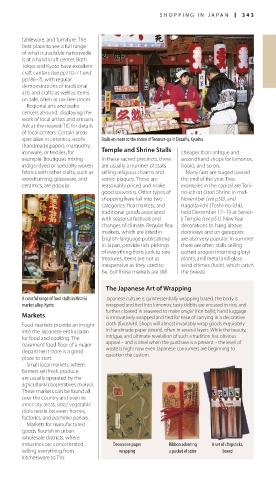
The Japanese Art of Wrapping
A colorful range of food stalls in Nishiki Japanese culture is quintessentially wrapping based: the body is
market alley, Kyoto wrapped and tied into kimonos; tasty tidbits are encased in rice, and
further cloaked in seaweed to make onigiri (rice balls); hand luggage
Markets is innovatively wrapped and tied for ease of carrying in a decorative
Food markets provide an insight cloth (furoshiki). Shops will almost invariably wrap goods exquisitely
into the Japanese enthusiasm in handmade paper (washi), often in several layers. While the beauty,
for food and cooking. The intrigue, and ultimate revelation of such a tradition has obvious
basement food floor of a major ap peal – and is ideal when the purchase is a present – the level of
department store is a good waste is high: now even Japanese consumers are beginning to
question the custom.
place to start.
Small local markets, where
farmers sell fresh produce,
are usually operated by the
agricultural cooperatives (nokyo).
These markets can be found all
over the country and even in
inner city areas, since vegetable
plots nestle between homes,
factories, and pachinko parlors.
Markets for manufactured
goods flourish in urban
wholesale districts, where
industries are concentrated, Decorative paper Ribbon adorning A set of chopsticks,
selling everything from wrapping a packet of spice boxed
kitchenware to TVs.
342-343_EW_Japan.indd 343 08/08/16 2:54 pm

