


Page 344 - (DK Eyewitness) Travel Guide: Japan
P. 344
342 TR A VELERS ’ NEEDS
displays of noodles, tofu,
kamaboko (fish-paste products),
tempura, sashimi, and bento
(prepared lunch boxes). Under
the same roof as the
supermarket may be a florist,
bakery, dry cleaners, and
drugstore (kusuriya).
Kinokuniya and Meiji-ya
supermarkets specialize in
high-quality imports. At the
other end of the scale, Jusco
offers economically priced store-
brand goods with an emphasis
on recycling and environmental
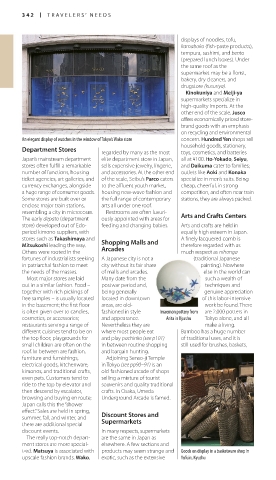
An elegant display of watches in the window of Tokyo’s Wako store concern. Hundred Yen shops sell
house hold goods, stationery,
Department Stores
regarded by many as the most toys, cosmetics, and batteries –
Japan’s mainstream department elite department store in Japan, all at ¥100. Ito-Yokado, Seiyu,
stores often fulfill a remark able sells expensive jewelry, lingerie, and Daikuma cater to families;
number of functions, housing and acces sories. At the other end outlets like Aoki and Konaka
ticket agencies, art galleries, and of the scale, Seibu’s Parco caters specialize in men’s suits. Being
currency ex changes, alongside to the affluent youth market, cheap, cheerful, in strong
a huge range of consumer goods. housing new-wave fashion and competi tion, and often near train
Some stores are built over or the full range of contem porary sta tions, they are always packed.
enclose major train stations, arts all under one roof.
resembling a city in micro cosm. Restrooms are often luxuri-
The early depato (department ously appointed with areas for Arts and Crafts Centers
store) developed out of Edo- feeding and changing babies. Arts and crafts are held in
period kimono suppliers, with equally high esteem in Japan.
stores such as Takashimaya and A finely lacquered comb is
Mitsukoshi leading the way. Shopping Malls and therefore regarded with as
Arcades
Others were rooted in the much respect as nihonga
fortunes of industrialists seek ing A Japanese city is not a (traditional Japanese
in patriarchal fashion to meet city without its fair share painting). Nowhere
the needs of the masses. of malls and arcades. else in the world can
Most major stores are laid Many date from the such a wealth of
out in a similar fashion. Food – postwar period and, techniques and
together with rich pickings of being generally genuine appre ciation
free samples – is usually located located in downtown of this labor-intensive
in the basement; the first floor areas, are old- work be found. There
is often given over to candies, fashioned in style Imaemon pottery from are 2,000 potters in
cosmetics, or accessories; and appearance. Arita in Kyushu Tokyo alone, and all
restaurants serving a range of Nevertheless they are make a living.
different cuisines tend to be on where most people eat Bamboo has a huge number
the top floor; playgrounds for and play pachinko (see p101) of tradi tional uses, and it is
small children are often on the in between routine shopping still used for brushes, bas kets,
roof. In between are fashion, and bargain hunting.
furniture and furnishings, Adjoining Senso-ji Temple
electrical goods, kitchenware, in Tokyo (see pp90–91) is an
kimonos, and traditional crafts, old-fashioned arcade of shops
even pets. Customers tend to selling a mixture of tourist
ride to the top by elevator and souvenirs and quality tradi tional
then descend by escalator, crafts. In Osaka, Umeda
browsing and buying en route; Underground Arcade is famed.
Japan calls this the “shower
effect.” Sales are held in spring,
summer, fall, and winter, and Discount Stores and
Supermarkets
there are addi tional special
discount events. In many respects, supermarkets
The really top-notch depart- are the same in Japan as
ment stores are more special- elsewhere. A few sections and
ized. Matsuya is associated with products may seem strange and Goods on display in a basketware shop in
upscale fashion brands. Wako, exotic, such as the extensive Yufuin, Kyushu
342-343_EW_Japan.indd 342 08/08/16 2:54 pm

