


Page 84 - (DK Eyewitness) Travel Guide: Japan
P. 84
82 T OK Y O AREA B Y AREA
1 Ueno Park
Ueno Park
Ieyasu, the first Tokugawa shogun, built the Kanei-ji Temple
and subtemples here in the 1600s to negate evil spirits from
the northeast. Judging by how long the Tokugawas lasted, it
was a wise move. In 1873, five years after the Battle of Ueno,
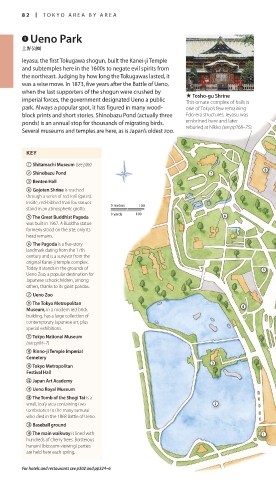
when the last supporters of the shogun were crushed by . Tosho-gu Shrine
imperial forces, the government designated Ueno a public This ornate complex of halls is
park. Always a popular spot, it has figured in many wood- one of Tokyo’s few remain ing
block prints and short stories. Shinobazu Pond (actually three Edo-era structures. Ieyasu was
ponds) is an annual stop for thousands of migrating birds. enshrined here and later
reburied at Nikko (see pp268–75).
Several museums and temples are here, as is Japan’s oldest zoo.
KEY
1 Shitamachi Museum (see p88)
2 Shinobazu Pond
3 Benten Hall
4 Gojoten Shrine is reached
through a series of red torii (gates).
Inside, red-bibbed Inari fox statues 0 meters 100
stand in an atmo spheric grotto.
0 yards 100
5 The Great Buddhist Pagoda
was built in 1967. A Buddha statue
formerly stood on the site; only its
head remains.
6 The Pagoda is a five-story
landmark dating from the 17th
century and is a survivor from the
original Kanei-ji temple complex.
Today it stands in the grounds of
Ueno Zoo, a popular destination for
Japanese schoolchildren, among
others, thanks to its giant pandas.
7 Ueno Zoo
8 The Tokyo Metropolitan
Museum, in a modern red-brick
building, has a large collection of
contemporary Japanese art, plus
special exhibitions.
9 Tokyo National Museum
(see pp84–7)
0 Rinno-ji Temple Imperial
Cemetery
q Tokyo Metropolitan
Festival Hall
w Japan Art Academy
e Ueno Royal Museum
r The Tomb of the Shogi Tai is a
small, leafy area containing two
tombstones to the many samurai
who died in the 1868 Battle of Ueno.
t Baseball ground
y The main walkway is lined with
hundreds of cherry trees. Boisterous
hanami (blossom-viewing) parties
are held here each spring.
For hotels and restaurants see p302 and pp324–6
082-083_EW_Japan.indd 82 08/08/16 2:53 pm

