


Page 34 - (DK Eyewitness) Travel Guide - Scotland
P. 34
32 INTRODUCING SC O TLAND A POR TR AIT OF SC O TLAND 33
Clans and Tartans The Sinclairs Plant Badges
came from France
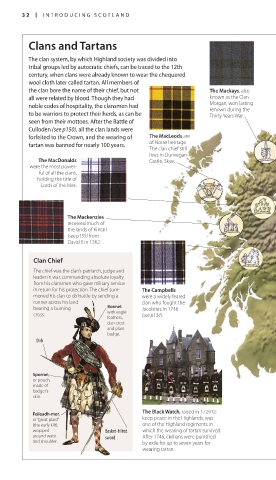
The clan system, by which Highland society was divided into in the 11th Each clan had a plant
century and
tribal groups led by autocratic chiefs, can be traced to the 12th became Earls of associated with its ter ritory.
century, when clans were already known to wear the chequered Caithness in 1455. It was worn on the bonnet,
especially on the day
wool cloth later called tartan. All members of of battle.
the clan bore the name of their chief, but not The Mackays, also
all were related by blood. Though they had known as the Clan
noble codes of hospitality, the clansmen had Morgan, won lasting
renown during the
to be warriors to protect their herds, as can be Thirty Years War.
seen from their mottoes. After the Battle of
Culloden (see p150), all the clan lands were
forfeited to the Crown, and the wearing of The MacLeods are Scots pine was worn by the
tartan was banned for nearly 100 years. of Norse heritage. MacGregors of Argyll.
The clan chief still
lives in Dunvegan The Frasers came George IV, dressed as a
The MacDonalds Castle, Skye. over to Britain from Highlander, visited Edinburgh
were the most power France with William in 1822, the year of the tartan
ful of all the clans, the Conqueror and revival. Many tartan “setts”
holding the title of his followers in 1066. (patterns) date from this time,
Lords of the Isles. as the original ones were lost. Rowan berries were worn
by the Clan Malcolm.
The Mackenzies
received much of
the lands of Kintail
(see p155) from
David II in 1362. Ivy was worn by the Clan
Gordon of Aberdeenshire.
The Gordons were
famously good
Clan Chief soldiers; the clan
The chief was the clan’s patriarch, judge and motto was “by cour-
leader in war, commanding absolute loyalty age, not by craft”.
from his clansmen who gave mili tary service The Stuarts were
in return for his protection. The chief sum The Campbells Scotland’s royal
moned his clan to do battle by sending a were a widely feared dynasty. Their motto Spear thistle, now a national
run ner across his land clan who fought the was “no one harms symbol, was a Stuart badge.
bearing a burning Bonnet Jacobites in 1746 me with impunity”.
cross. with eagle (see p134).
feathers,
clan crest
and plant Clan Territories
badge.
Dirk The territories of 10 major clans The Douglas clan
are marked here with their clan was prominent in
crests and tartan. The patterns Scottish history, Cotton grass was worn by the
shown are modern ver sions of though its origin is Clan Henderson.
original tartan designs. unknown.
Sporran,
or pouch, Highland Clans Today
made of
badger’s Once the daily dress of the clansmen, the kilt continues to be
skin. a symbol of national pride. The one-piece feileadh-mor has
been replaced by the feileadh-beag, or “small plaid”, made from
Feileadh-mor, The Black Watch, raised in 1729 to approximately 7 m (23 ft) of material with a double apron
or “great plaid” keep peace in the Highlands, was fastened at the front with a silver pin. Though they exist now
(the early kilt), one of the Highland regiments in only in name, the clans are still a strong source of pride for
wrap ped Basket-hilted which the wearing of tartan sur vived. Scots, and many still live in areas tradition ally belonging to
around waist sword After 1746, civilians were punished their clans. Many visitors to Britain can trace their Scots
and shoulder. by exile for up to seven years for ancestry back to the Highlands. Modern Highland formal dress
wearing tartan.
SCT_032-033_Feat7.indd 32 25/09/13 4:15 PM SCT_032-033_Feat7.indd 33 25/09/13 4:15 PM
Eyewitness Travel LAYERS PRINTED:
Feature template “UK” LAYER
(SourceReport v1.3)
Date 18th October 2012
Size 125mm x 217mm

