


Page 612 - First Aid for the USMLE Step 1 2020, Thirtieth edition [MedicalBooksVN.com]_Neat
P. 612
568 sEctiON iii Psychiatry ` Psychiatry—Pathology Psychiatry ` Psychiatry—Pathology
Sleep terror disorder Periods of inconsolable terror with screaming in the middle of the night. Most common in
children. Occurs during slow-wave/deep (stage N3) non-REM sleep with no memory of the
arousal episode, as opposed to nightmares that occur during REM sleep (remembering a scary
dream). Triggers include emotional stress, fever, and lack of sleep. Usually self limited.
Enuresis Nighttime urinary incontinence ≥ 2 times/week for ≥ 3 months in person > 5 years old. First-line
treatment: behavioral modification (eg, scheduled voids, nighttime fluid restriction) and positive
reinforcement. For refractory cases: bedwetting alarm, oral desmopressin (ADH analog; preferred
over imipramine due to fewer side effects).
Narcolepsy Excessive daytime sleepiness (despite awakening well-rested) with recurrent episodes of rapid-onset,
overwhelming sleepiness ≥ 3 times/week for the last 3 months. Due to orexin (hypocretin)
production in lateral hypothalamus and dysregulated sleep-wake cycles. Associated with:
Hypnagogic (just before going to sleep) or hypnopompic (just before awakening; get pomped
up in the morning) hallucinations.
Nocturnal and narcoleptic sleep episodes that start with REM sleep (sleep paralysis).
Cataplexy (loss of all muscle tone following strong emotional stimulus, such as laughter).
Treatment: good sleep hygiene (scheduled naps, regular sleep schedule), daytime stimulants (eg,
amphetamines, modafinil) and/or nighttime sodium oxybate (GHB).
Substance use Maladaptive pattern of substance use involving ≥ 2 of the following in the past year:
disorder Tolerance
Withdrawal
Intense, distracting cravings
Using more, or longer, than intended
Persistent desire but inability to cut down
Time-consuming substance acquisition, use, or recovery
Impaired functioning at work, school, or home
Social or interpersonal conflicts
Reduced recreational activities
> 1 episode of use involving danger (eg, unsafe sex, driving while impaired)
Continued use despite awareness of harm
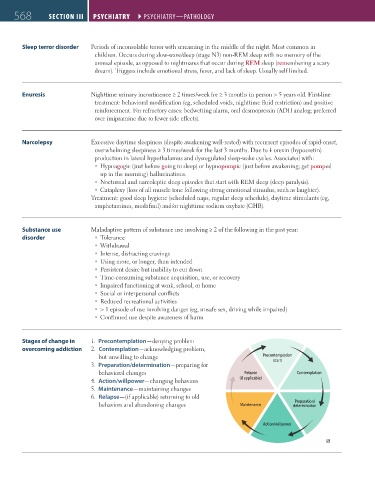
Stages of change in 1. Precontemplation—denying problem
overcoming addiction 2. Contemplation—acknowledging problem,
but unwilling to change Precontemplation
3. Preparation/determination—preparing for (start)
behavioral changes Relapse Contemplation
4. Action/willpower—changing behaviors (if applicable)
5. Maintenance—maintaining changes
6. Relapse—(if applicable) returning to old
Preparation/
behaviors and abandoning changes Maintenance determination
Action/willpower
FAS1_2019_13-Psych.indd 568 11/7/19 5:28 PM

