


Page 66 - Module DMV20173
P. 66
4.0   BULK DEFORMATION PROCESSES


                          CHAPTER 4 :  BULK DEFORMATION PROCESSES


                   4.1  INTRODUCTION


                   Metallic components can be shaped in a manner similar to the molding of pottery. The raw
                   material  of  a  fundamental  simpler  shape  is  provided  by  a  primary  process  like  casting,
                   powder  consolidation,  earlier  forming  processes,  or  even  by  electric  deposition.  Metals

                   deform very much like soft clay or wax. Even in the solid state, permanent changes in shape
                   can be forced upon them by displacement of relative positions between neighboring material
                   points. To enforce these changes, external forces are applied. While soft plasticine can be

                   molded by tiny toddler’s fingers, for metal forming, specially constructed tooling, usually of
                   hard  materials,  are  manipulated,  sometimes  by  colossal  machinery. A variety of  bulk
                   deformation  process,  the  equipment  and  tooling,  and  the  concepts  involved  will  be

                   discussed in this course. This will provide an understanding of the typical processes (rolling,
                   forging and extrusion) involved.


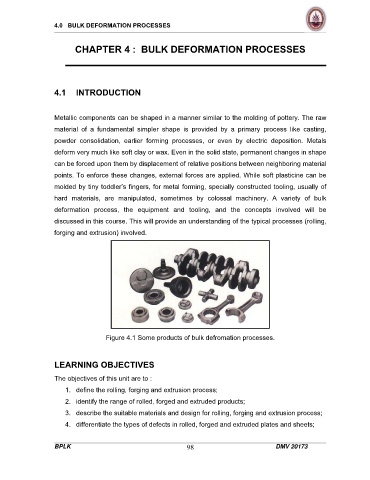
                                    Figure 4.1 Some products of bulk defromation processes.


                   LEARNING OBJECTIVES

                   The objectives of this unit are to :

                       1.  define the rolling, forging and extrusion process;
                       2.  identify the range of rolled, forged and extruded products;
                       3.  describe the suitable materials and design for rolling, forging and extrusion process;

                       4.  differentiate the types of defects in rolled, forged and extruded plates and sheets;


                   BPLK                                         98                           DMV 20173

