


Page 75 - 2010-2022 hose manufactureing ability and guide
P. 75
Dimensions in millimeters
                                 Hose test piece, approx.
                                 300
                        100


                                 25            100           25


                                        9 V d.c.
                                        insulation tester          Metallic foil
                                                                   pieces wrapped
                                                                   around conducting
                                                                   electrodes and
                                                                   held by clips


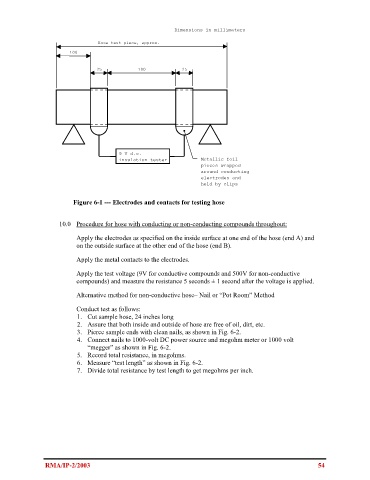
                         Figure 6-1 --- Electrodes and contacts for testing hose


                     10.0   Procedure for hose with conducting or non-conducting compounds throughout:

                                Apply the electrodes as specified on the inside surface at one end of the hose (end A) and
                          on the outside surface at the other end of the hose (end B).

                                Apply the metal contacts to the electrodes.

                                Apply the test voltage (9V for conductive compounds and 500V for non-conductive
                          compounds) and measure the resistance 5 seconds ± 1 second after the voltage is applied.

                                Alternative method for non-conductive hose– Nail or “Pot Room” Method

                                Conduct test as follows:
                           1.    Cut sample hose, 24 inches long
                           2.    Assure that both inside and outside of hose are free of oil, dirt, etc.
                           3.    Pierce sample ends with clean nails, as shown in Fig. 6-2.
                           4.    Connect nails to 1000-volt DC power source and megohm meter or 1000 volt
                              “megger” as shown in Fig. 6-2.
                           5.    Record total resistance, in megohms.
                           6. Measure “test length” as shown in Fig. 6-2.
                           7. Divide total resistance by test length to get megohms per inch.


                RMA/IP-2/2003                                                                             54

