


Page 145 - Towards Trustworthy Elections New Directions in Electronic Voting by Ed Gerck (auth.), David Chaum, Markus Jakobsson, Ronald L. Rivest, Peter Y. A. Ryan, Josh Benaloh, Miroslaw Kutylowski, Ben Adida ( (z-lib.org (1)
P. 145
137
                                                             Electronic Elections: A Balancing Act


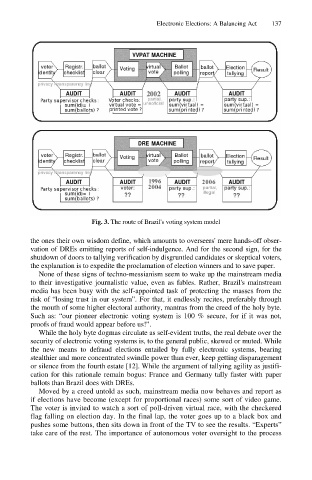
                                           Fig. 3. The route of Brazil's voting system model


                          the ones their own wisdom define, which amounts to overseers' mere hands-off obser-
                          vation of DREs emitting reports of self-indulgence. And for the second sign, for the
                          shutdown of doors to tallying verification by disgruntled candidates or skeptical voters,
                          the explanation is to expedite the proclamation of election winners and to save paper.
                            None of these signs of techno-messianism seem to wake up the mainstream media
                          to their investigative journalistic  value, even as  fables.  Rather, Brazil's  mainstream
                          media has been busy with the self-appointed task of protecting the masses from the
                          risk of “losing trust in our system”. For that, it endlessly recites, preferably through
                          the mouth of some higher electoral authority, mantras from the creed of the holy byte.
                          Such as:  “our pioneer electronic  voting system  is 100 %  secure,  for if it  was  not,
                          proofs of fraud would appear before us!”.
                            While the holy byte dogmas circulate as self-evident truths, the real debate over the
                          security of electronic voting systems is, to the general public, skewed or muted. While
                          the new  means to defraud elections entailed by  fully electronic systems, bearing
                          stealthier and more concentrated swindle power than ever, keep getting disparagement
                          or silence from the fourth estate [12]. While the argument of tallying agility as justifi-
                          cation for this rationale remain bogus: France and Germany tally  faster  with paper
                          ballots than Brazil does with DREs.
                            Moved by a creed untold as such, mainstream media now behaves and report as
                          if elections have become (except for proportional races) some sort of video game.
                          The voter is invited to watch a sort of poll-driven virtual race, with the checkered
                          flag falling on election day. In the final lap, the voter goes up to a black box and
                          pushes some buttons, then sits down in front of the TV to see the results. “Experts”
                          take care of the rest. The importance of autonomous voter oversight to the process

