


Page 167 - Towards Trustworthy Elections New Directions in Electronic Voting by Ed Gerck (auth.), David Chaum, Markus Jakobsson, Ronald L. Rivest, Peter Y. A. Ryan, Josh Benaloh, Miroslaw Kutylowski, Ben Adida ( (z-lib.org (1)
P. 167
Univ. Verifiability
                                                  Efficient Tallying
                           Approaches
                                                                                    Write-ins
                                                  √
                                                                   √
                           Homomorphic Encryption
                                                                                    ×
                                                                   √
                                                                                    √
                           Mix-networks
                                                  ×
                                                                                    √
                                                  √
                           Blind-Signatures  The Vector-Ballot Approach for Online Voting Procedures  159
                                                                   ×
                                                  √                √                √
                                                   ∗
                           Vector-Ballot approach
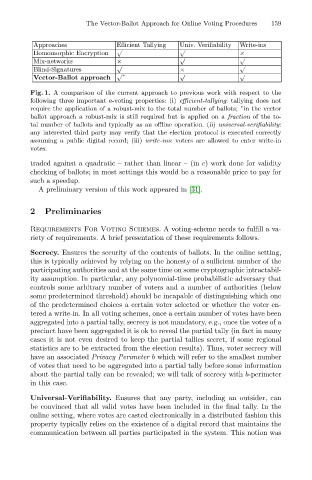
                          Fig. 1. A comparison of the current approach to previous work with respect to the
                          following three important e-voting properties: (i) efficient-tallying: tallying does not
                          require the application of a robust-mix to the total number of ballots; in the vector
                                                                                    ∗
                          ballot approach a robust-mix is still required but is applied on a fraction of the to-
                          tal number of ballots and typically as an offline operation. (ii) universal-verifiability:
                          any interested third party may verify that the election protocol is executed correctly
                          assuming a public digital record; (iii) write-ins: voters are allowed to enter write-in
                          votes.
                          traded against a quadratic – rather than linear – (in c) work done for validity
                          checking of ballots; in most settings this would be a reasonable price to pay for
                          such a speedup.
                            A preliminary version of this work appeared in [31].
                          2   Preliminaries
                          Requirements For Voting Schemes. A voting-scheme needs to fulfill a va-
                          riety of requirements. A brief presentation of these requirements follows.
                          Secrecy. Ensures the security of the contents of ballots. In the online setting,
                          this is typically achieved by relying on the honesty of a sufficient number of the
                          participating authorities and at the same time on some cryptographic intractabil-
                          ity assumption. In particular, any polynomial-time probabilistic adversary that
                          controls some arbitrary number of voters and a number of authorities (below
                          some predetermined threshold) should be incapable of distinguishing which one
                          of the predetermined choices a certain voter selected or whether the voter en-
                          tered a write-in. In all voting schemes, once a certain number of votes have been
                          aggregated into a partial tally, secrecy is not mandatory, e.g., once the votes of a
                          precinct have been aggregated it is ok to reveal the partial tally (in fact in many
                          cases it is not even desired to keep the partial tallies secret, if some regional
                          statistics are to be extracted from the election results). Thus, voter secrecy will
                          have an associated Privacy Perimeter b which will refer to the smallest number
                          of votes that need to be aggregated into a partial tally before some information
                          about the partial tally can be revealed; we will talk of secrecy with b-perimeter
                          in this case.

                          Universal-Verifiability. Ensures that any party, including an outsider, can
                          be convinced that all valid votes have been included in the final tally. In the
                          online setting, where votes are casted electronically in a distributed fashion this
                          property typically relies on the existence of a digital record that maintains the
                          communication between all parties participated in the system. This notion was

