


Page 171 - Towards Trustworthy Elections New Directions in Electronic Voting by Ed Gerck (auth.), David Chaum, Markus Jakobsson, Ronald L. Rivest, Peter Y. A. Ryan, Josh Benaloh, Miroslaw Kutylowski, Ben Adida ( (z-lib.org (1)
P. 171
The Vector-Ballot Approach for Online Voting Procedures


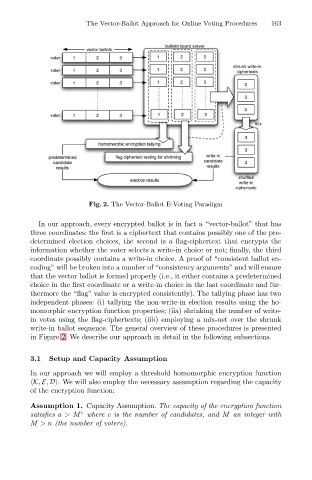
                                          Fig. 2. The Vector-Ballot E-Voting Paradigm       163


                            In our approach, every encrypted ballot is in fact a “vector-ballot” that has
                          three coordinates: the first is a ciphertext that contains possibly one of the pre-
                          determined election choices, the second is a flag-ciphertext that encrypts the
                          information whether the voter selects a write-in choice or not; finally, the third
                          coordinate possibly contains a write-in choice. A proof of “consistent ballot en-
                          coding” will be broken into a number of “consistency arguments” and will ensure
                          that the vector ballot is formed properly (i.e., it either contains a predetermined
                          choice in the first coordinate or a write-in choice in the last coordinate and fur-
                          thermore the “flag” value is encrypted consistently). The tallying phase has two
                          independent phases: (i) tallying the non-write-in election results using the ho-
                          momorphic encryption function properties; (iia) shrinking the number of write-
                          in votes using the flag-ciphertexts; (iib) employing a mix-net over the shrunk
                          write-in ballot sequence. The general overview of these procedures is presented
                          in Figure 2. We describe our approach in detail in the following subsections.


                          3.1  Setup and Capacity Assumption
                          In our approach we will employ a threshold homomorphic encryption function
                           K, E, D . We will also employ the necessary assumption regarding the capacity
                          of the encryption function:

                          Assumption 1. Capacity Assumption. The capacity of the encryption function
                          satisfies a>M where c is the number of candidates, and M an integer with
                                        c
                          M> n (the number of voters).

