


Page 393 - (ISC)² CISSP Certified Information Systems Security Professional Official Study Guide
P. 393
Asymmetric Key Algorithms


               Asymmetric key algorithms, also known as public key algorithms,
               provide a solution to the weaknesses of symmetric key encryption. In
               these systems, each user has two keys: a public key, which is shared
               with all users, and a private key, which is kept secret and known only
               to the user. But here’s a twist: opposite and related keys must be used

               in tandem to encrypt and decrypt. In other words, if the public key
               encrypts a message, then only the corresponding private key can
               decrypt it, and vice versa.

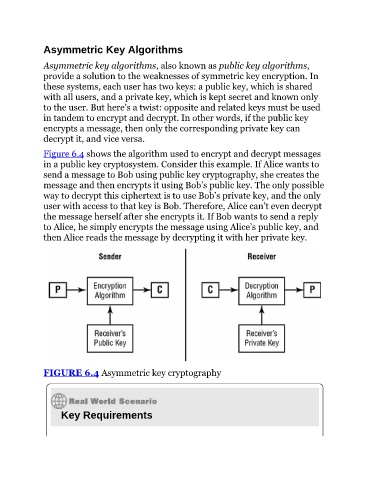
               Figure 6.4 shows the algorithm used to encrypt and decrypt messages
               in a public key cryptosystem. Consider this example. If Alice wants to
               send a message to Bob using public key cryptography, she creates the
               message and then encrypts it using Bob’s public key. The only possible

               way to decrypt this ciphertext is to use Bob’s private key, and the only
               user with access to that key is Bob. Therefore, Alice can’t even decrypt
               the message herself after she encrypts it. If Bob wants to send a reply
               to Alice, he simply encrypts the message using Alice’s public key, and
               then Alice reads the message by decrypting it with her private key.


               FIGURE 6.4 Asymmetric key cryptography


                   Key Requirements

