


Page 168 - sarah-simblet_sketch-book-for-the-artist
P. 168
COSTUME168

         Textures and.Patterns

         THIS CLASS FOCUSES ON how to draw textures through the           To draw a fabric texture, begin by concentrating on how
         collection of fabric, pattern, and embroidery samples from a     you imagine it w o u l d feel if you t o u c h e d it. Decide if it
         costume museum. This formal method, using ruled squares,         would be rough, smooth, warm, cold, thick, thin, tough,
         can create an invaluable library of ideas and information        or fragile, for example. As you draw, believe you can feel
         for future reference—when painting a clothed figure, or          these qualities at your fingertips and that your pencil is
         preparing a textile project, for example. However, if making     responding to the sensation. Undulate the pressure of your
         a book of samples for a project, remember that it is important   lines and marks according to the feeling of the fabric rather
         to also include collages of f o u n d materials (see pp.230-31)  than its appearance. Let your pencil enact the sensation of
         and to experiment more loosely with mixed media.                 touching its surface.

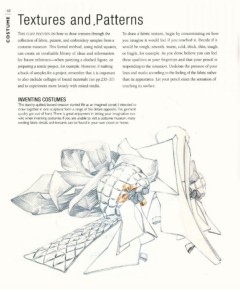
         INVENTING COSTUMES

         This starchy, quilted, b o w e d creation started life as an imagined corset, I intended t o
         draw together in one sculptural form a range of the details opposite. The garment
         quickly got o u t o f hand. T h e r e is great e n j o y m e n t in letting y o u r imagination run
         wild when inventing costumes. If you are unable t o visit a costume museum, many
         exciting fabric details and textures can be found in your o w n closet or home.

