


Page 16 - REPOWER REFERENCE GUIDE (2020)
P. 16
Important Information

           The level at which phase separation can occur is determined by a number of variables, including the amount of ethanol, the
           composition of the fuel, the temperature of the environment and the presence of contaminants. It is very important A) that the
           system is inspected for significant quantities of water in the tank before using gasoline with ethanol, and B) to limit exposure of
           the fuel tank to excess water. For our method, see the recommendation in Checking for Water in the Fuel. If phase
           separation has occurred, you must completely remove all free water from the system and replace the fuel before continuing
           operation. Otherwise, engine damage will occur.


                                                                            24230
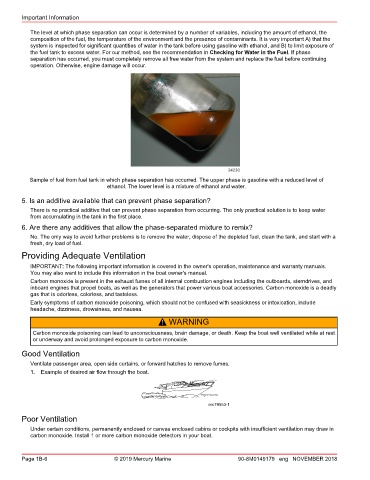
           Sample of fuel from fuel tank in which phase separation has occurred. The upper phase is gasoline with a reduced level of
                                    ethanol. The lower level is a mixture of ethanol and water.
        5. Is an additive available that can prevent phase separation?
           There is no practical additive that can prevent phase separation from occurring. The only practical solution is to keep water
           from accumulating in the tank in the first place.
        6. Are there any additives that allow the phase-separated mixture to remix?
           No. The only way to avoid further problems is to remove the water, dispose of the depleted fuel, clean the tank, and start with a
           fresh, dry load of fuel.
        Providing Adequate Ventilation

           IMPORTANT: The following important information is covered in the owner's operation, maintenance and warranty manuals.
           You may also want to include this information in the boat owner's manual.
           Carbon monoxide is present in the exhaust fumes of all internal combustion engines including the outboards, sterndrives, and
           inboard engines that propel boats, as well as the generators that power various boat accessories. Carbon monoxide is a deadly
           gas that is odorless, colorless, and tasteless.
           Early symptoms of carbon monoxide poisoning, which should not be confused with seasickness or intoxication, include
           headache, dizziness, drowsiness, and nausea.
                                                      !  WARNING

            Carbon monoxide poisoning can lead to unconsciousness, brain damage, or death. Keep the boat well ventilated while at rest
            or underway and avoid prolonged exposure to carbon monoxide.

        Good Ventilation
           Ventilate passenger area, open side curtains, or forward hatches to remove fumes.
           1.  Example of desired air flow through the boat.


                                                                      mc79553-1
        Poor Ventilation

           Under certain conditions, permanently enclosed or canvas enclosed cabins or cockpits with insufficient ventilation may draw in
           carbon monoxide. Install 1 or more carbon monoxide detectors in your boat.


        Page 1B-6                      © 2019 Mercury Marine                    90-8M0149179 eng NOVEMBER 2018

