


Page 241 - Basic Principles of Textile Coloration
P. 241
230 DYEING MACHINERY

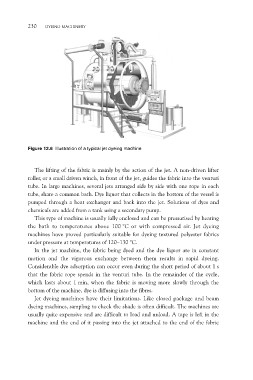
Figure 12.6 Illustration of a typical jet dyeing machine

   The lifting of the fabric is mainly by the action of the jet. A non-driven lifter
roller, or a small driven winch, in front of the jet, guides the fabric into the venturi
tube. In large machines, several jets arranged side by side with one rope in each
tube, share a common bath. Dye liquor that collects in the bottom of the vessel is
pumped through a heat exchanger and back into the jet. Solutions of dyes and
chemicals are added from a tank using a secondary pump.

   This type of machine is usually fully enclosed and can be pressurised by heating
the bath to temperatures above 100 °C or with compressed air. Jet dyeing
machines have proved particularly suitable for dyeing textured polyester fabrics
under pressure at temperatures of 120–130 °C.

   In the jet machine, the fabric being dyed and the dye liquor are in constant
motion and the vigorous exchange between them results in rapid dyeing.
Considerable dye adsorption can occur even during the short period of about 1 s
that the fabric rope spends in the venturi tube. In the remainder of the cycle,
which lasts about 1 min, when the fabric is moving more slowly through the
bottom of the machine, dye is diffusing into the fibres.

   Jet dyeing machines have their limitations. Like closed package and beam
dyeing machines, sampling to check the shade is often difficult. The machines are
usually quite expensive and are difficult to load and unload. A tape is left in the
machine and the end of it passing into the jet attached to the end of the fabric

