


Page 340 - Basic Principles of Textile Coloration
P. 340
DYEING POLYESTER WITH DISPERSE DYES 329

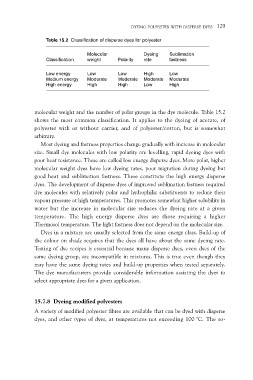
Table 15.2 Classification of disperse dyes for polyester

Classification  Molecular  Polarity  Dyeing               Sublimation
                weight               rate                 fastness

Low energy      Low        Low       High                 Low
Medium energy   Moderate
High energy     High       Moderate Moderate Moderate

                           High      Low                  High

molecular weight and the number of polar groups in the dye molecule. Table 15.2
shows the most common classification. It applies to the dyeing of acetate, of
polyester with or without carrier, and of polyester/cotton, but is somewhat
arbitrary.

   Most dyeing and fastness properties change gradually with increase in molecular
size. Small dye molecules with low polarity are levelling, rapid dyeing dyes with
poor heat resistance. These are called low energy disperse dyes. More polar, higher
molecular weight dyes have low dyeing rates, poor migration during dyeing but
good heat and sublimation fastness. These constitute the high energy disperse
dyes. The development of disperse dyes of improved sublimation fastness required
dye molecules with relatively polar and hydrophilic substituents to reduce their
vapour pressure at high temperatures. This promotes somewhat higher solubility in
water but the increase in molecular size reduces the dyeing rate at a given
temperature. The high energy disperse dyes are those requiring a higher
Thermosol temperature. The light fastness does not depend on the molecular size.

   Dyes in a mixture are usually selected from the same energy class. Build-up of
the colour on shade requires that the dyes all have about the same dyeing rate.
Testing of dye recipes is essential because many disperse dyes, even dyes of the
same dyeing group, are incompatible in mixtures. This is true even though they
may have the same dyeing rates and build-up properties when tested separately.
The dye manufacturers provide considerable information assisting the dyer to
select appropriate dyes for a given application.

15.7.8 Dyeing modified polyesters

A variety of modified polyester fibres are available that can be dyed with disperse
dyes, and other types of dyes, at temperatures not exceeding 100 °C. The so-

