


Page 112 - fbkCardioDiabetes_2017
P. 112
88                             Peripheral Vascular Disease


              activity such as walking and disappears after several            Classification of PVD
              minutes of rest
                                                                  Grade     Category   Clinical Discription
                                                                  0         0          Asymptomatic
                                                                  i         1          Mild claudication
                                                                  ii        2          Mod-Severe claudication
                                                                  iii       3          Sev claudication
                                                                  iv        4          Ulceration or gangrene
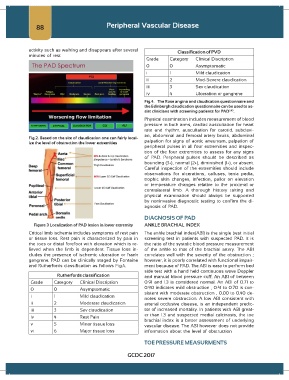
                                                                 Fig.4.    The Rose angina and claudication questionnaire and
                                                                 the Edinburgh claudication questionnaire can be used to as-
                                                                 sist clinicians with screening patients for PAD 2&3 .
                                                                 Physical examination includes measurement of blood
                                                                 pressure in both arms, cardiac auscultation for heart
                                                                 rate  and rhythm,  auscultation  for  carotid, subclavi-
                                                                 an,  abdominal and  femoral artery  bruits, abdominal
              Fig.2. Based on the site of claudication one can fairly local-
              ize the level of obstruction the lower extremities   palpation for  signs  of aortic aneurysm, palpation of
                                                                 peripheral  pulses  in all  four  extremities  and inspec-
                                                                 tion of the four extremities  to assess  for  any signs
                                                                 of  PAD.  Peripheral  pulses  should be  described  as
                                                                 bounding (3+), normal (2+), diminished (1+), or absent.
                                                                 Careful inspection of the extremities should include
                                                                 observations  for  ulcerations, calluses,  tenia pedia,
                                                                 trophic skin  changes, infection,  pallor  on elevation
                                                                 or temperature  changes  relative to  the  proximal  or
                                                                 contralateral limb. A  thorough history  taking and
                                                                 physical  examination  should always be supported
                                                                 by noninvasive diagnostic testing to confirm  the di-
                                                                 agnosis of PAD.

                                                                 DIAGNOSIS OF PAD
                Figure 3 Localization of PAD lesion in lower extremity  ANKLE BRACHIAL INDEX
              Critical limb ischemia includes symptoms of rest pain   The ankle brachial index(ABI) is the single best initial
              or tissue  loss.  Rest pain is characterized  by pain in   screening test in patients with  suspected PAD. It is
              the toes or distal forefoot with elevation which is re-  the ratio of the systolic blood pressure measurement
              lieved when  the  limb is dependent.  Tissue  loss  in-  of the  ankle to that  of the  brachial  artery.  The ABI
              cludes the presence  of  ischemic ulceration or  frank   correlates  well  with  the severity  of the obstruction  ;
              gangrene.  PAD  can  be  clinically  staged  by  Fontaine   however, it is poorly correlated with functional impair-
              and Rutherfords classification as follows Fig.4.   ment because of PAD. The ABI is easy to perform bed
                                                                 side test with a hand held continuous wave Doppler
                          Rutherfords classification             and manual blood pressure cuff. An ABI of between
               Grade     Category   Clinical Discription         0.91 and 1.3 is considered  normal. An ABI  of 0.71 to
               0         0          Asymptomatic                 0.90 indicates mild obstruction , 0.41 to 0.70 is con-
                                                                 sistent with moderate obstruction , 0.00 to 0.40 de-
               i         1          Mild claudication
                                                                 notes severe  obstruction.  A  low  ABI  consistent with
               ii        2          Moderate claudication        arterial occlusive disease, is an independent predic-
               iii       3          Sev claudication             tor of increased mortality. In patients with ABI great-
                                                                 er than 1.3 and suspected medial calcinosis, the toe
               iv        4          Rest Pain
                                                                 brachial index  is  a better  assessment  of  underlying
               v         5          Minor tissue loss            vascular disease. The ABI however does not provide
               vi        6          Major tissue loss            information about the level of obstruction

                                                                 TOE PRESSURE MEASURMENTS


                                                         GCDC 2017

