


Page 578 - fbkCardioDiabetes_2017
P. 578
554         Novel Oral Anti Coagulants In Chronic Kidney Disease


              cleared  by  standard 4 hour hemodialysis  (dialysate   The  2015  updated European  Heart  Rhythm  Associ-
              flow rate 500ml/min, blood flow rate 350 to 500 ml/  ation  practical  guidelines on the use of non-vitamin
              min,  no heparin)[2].  Hence in patients on apixaban   K antagonist anticoagulant  agents in patients with
              with life threatening bleeding or drug overdose, dial-  nonvalvular  AF recommend refraining  from NOACs
              ysis is not effective to remove apixaban from circu-  use  in  dialysis  patients  and those  with CrCl  <30ml/
              lation. Although 4- factor prothrombin complex con-  min[2,5]  (Table 1 & 2)
              centrate may reverse the effect of apixaban.
                                                                 Bullets:
              Edoxaban , a  newer factor Xa inhibitor approved for
              anticoagulation use in the United States of America   •  Warfarin can be used in all stages of CKD includ-
              although  it’s not  marketed in the US  at  present.[2]   ing those patients on dialysis
              Renal clearance is about 50% of the un-metabolized   •  Concomintent use with anti platelet therapy exer-
              drug. Because of an increased risk of ischemic stroke   cise extreme caution while using warfarin.
              compared to warfarin observed in the registered tri-
              als, the FDA has now contraindicated the use edox-  •  Persistent use of warfarin may produce a contition
              aban in individuals with super normal renal function.  called warfarin nephropathy with decrease in GFR.
              The  American College of Cardiology and the Ameri-  •  NOACs  such as  dabigatran, apixaban, edoxaban
              can Heart Association(AHA-ACC ) and Heart Rhythm     and  rivaroxaban  require  dose adjustment  in vari-
              Society (HRS) guildelines  indicate  warfarin as gold   ous stages  of CKD  and  requires  long term study
              standard therapy in stage 4(eGFR between 15 and 30   for their safety in CKD.
              ml/min/m2),  stage 5CKD(eGFR  <15ml/min/1.73m2)    •  Apixaban  has  been  approved by  FDA  for  use  in
              and patients on dialysis due to various degree of re-  Hemodialysis patients
              nal clearance of all NOACs [2].


               Parameters       Warfarin    Apixaban               Rivaroxaban    Edoxaban     Dabigatran
               Renal clearance  <1%         27%                    35%            50%          80%
               Dosing recommen-  Varying dosage  Serum creatinine≥1.5mg/dL,- CrCl≥50mL/min,   Crcl≥50mL/min,  CrCl≥50mL/min, no
               dation                       no adjustment(i.e 5mg BID) a*  no adjustment  no adjustment   adjustments (i.e 150
                                                                                  (i.e 60mg OD) b*  mg BID)*
                                                                   (i.e 20 mg OD)*


               Dosing if CKD    20% lower   CrCl 15-29mL/min: 2.5 mg   15mg OD when   30mg OD when   CrCl<50ml/min/m 2
                                dosage?     BID                    CrCl           CrCl 15-49 mL/
                                                                                  min*         110mg twice daily *
                                            If two-out-of-three: age≥-  15-49mL/min*
                                            80years,weight ≤60kg,
                                            serum creatinine≥1.5mg/dL*
               Not recommended if   Can be used in   <15mL/min**   <15mL/min      <15mL/min    30mL/min
                                ESRD and on
                                RRT
               Reversal agent   Vitamin K,FFP,   4F-PCC            4F-PCC         4F-PCC       Idarucizumab
                                4F-PCC
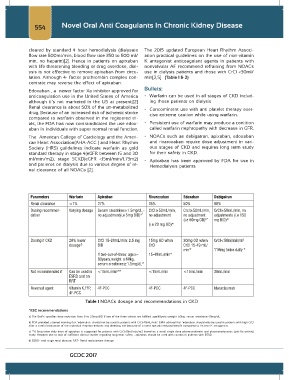
                                       Table 1 NOACs dosage and recommendations in CKD

              *ESC recommendations
              a) The SmPc specifies dose reduction from 5 to 2.5mg BID if two of the three criteria are fulfilled :age≥80years,weight ≤60kg, serum creatinine>1.5mg/dL.
              b) FDA provided a boxed warning that ‘edoxaban  should not be used in patients with CrCl>95mL/min’. EMA advised that ‘edoxaban should only be used in patients with high CrCl
              after a careful evaluation of the individual thrombo-embolic and bleeding risk’because of a trend towards reduced benefit compared to Vitamin K antagonists.
              c) **A 5mg twice daily dose of apixaban is suggested for patients with CrCl<15ml/min/m2 based on a small single dose pharmacokinetic and pharmacodynamic (anti-Xa activity)
              study. However due to lack of sufficient clinical studies regarding long term safety , apixaban should be used with caution in patients with ESRD
              d) ESRD= end stage renal disease, RRT= Renal replacement therapy


                                GCDC 2017

