


Page 62 - fbkCardioDiabetes_2017
P. 62
38 Cardio Diabetes Medicine 2017
Thisincreases sympathetic drive via central and pe-
ripheral mechanisms, thus contributing to increased
BP and heart rate.
Adiponectin, (an adipocyte derived peptide has anti-
inflammatory, insulin sensitizing and endothelium-
protective properties) is lower in obese subjects and
inversely related to systolic and diastolic pressure .
Sodium and water retention -Insulin promotes renal
tubular reabsorption of sodium via Na/H antiport
system or the Na/K ATPase in the renal tubule.
The ACE -D(Angiotensin Converting Enzyme-D) iso-
form is associated with an increase in the circulat-
ing ACE activity and has recently been shown to be
a significant predictor of weight gain and abdominal
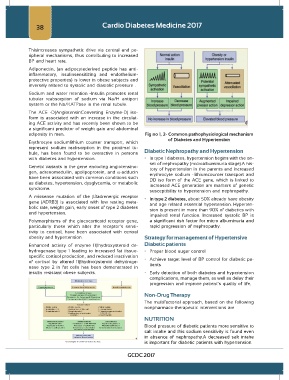
adiposity in men. Fig no 1, 2- Common pathophysiological mechanism
of Diabetes and Hypertension
Erythrocyte sodium lithium counter transport, which
represent sodium reabsorption in the proximal tu-
bule, has been found to be overactive in persons Diabetic Nephropathy and Hypertension
with diabetes and hypertension. • In type 1 diabetes, hypertension begins with the on-
set of nephropathy (microalbuminuria stage).A his-
Genetic variants in the gene encoding angiotensino- tory of hypertension in the parents and increased
gen, adrenomedullin, apolipoprotein, and α-adducin erythrocyte sodium -lithiumcounter transport and
have been associated with common conditions such DD iso form of the ACE gene, which is linked to
as diabetes, hypertension, dysglycemia, or metabolic increased ACE generation are markers of genetic
syndrome.
susceptibility to hypertension and nephropathy.
A missense mutation of the β3 adrenergic receptor • In type 2 diabetes, about 50% already have obesity
gene (ADRB3) is associated with low resting meta- and age related essential hypertension. Hyperten-
bolic rate, weight gain, early onset of type 2 diabetes sion is present in more than 90% of diabetics with
and hypertension.
impaired renal function. Increased systolic BP is
Polymorphisms of the glucocorticoid receptor gene, a significant risk factor for micro albuminuria and
particularly those which alter the receptor’s sensi- rapid progression of nephropathy.
tivity to cortisol, have been associated with central
obesity and hypertension. Strategy for management of Hypertensive
Enhanced activity of enzyme 11βhydroxysteroid de- Diabetic patients
hydrogenase type 1 leading to increased fat tissue- • Proper blood sugar control
specific cortisol production, and reduced inactivation • Achieve target level of BP control for diabetic pa-
of cortisol by altered 11β hydroxysteroid dehydroge- tients
nase type 2 in fat cells has been demonstrated in
insulin resistant obese subjects. • Early detection of both diabetes and hypertension
complications, manage them, as well as delay their
progression and improve patient’s quality of life.
Non-Drug Therapy
The multifactorial approach, based on the following
nonpharmaco-therapeutic interventions are
NUTRITION
Blood pressure of diabetic patients more sensitive to
salt intake and this sodium sensitivity is found even
in absence of nephropathy.A decreased salt intake
is important for diabetic patients with hypertension.
GCDC 2017

