


Page 58 - fbkCardioDiabetes_2017
P. 58
34                           Cardio Diabetes Medicine 2017


                                                                 nary  revascularization by  22 %,P=<0.001.  There  was
                                                                 no significant decrease in all cause or CV mortality.


                                                                 Alirocumab
                                                                 This is approved for clinical use in USA and is com-
                                                                 mercially available as 1 ml pen containing  75 or 150
                                                                 mg. It is given in doses in 150 mg. biweekly sc. It was
                                                                 evaluated in ODYSSEY Global Programme which in-
                                                                 cluded 11 trials and roughly has 22,000 patients

                                                                 Bococizumab
                                                                 The SPIRE 1 and 2 with Bococizumab was premature-
                                                                 ly  terminated because of  presence  of  neutralizing
                                                                 antibody in 29% and antidrug antibodies in 48% of
                                                                 patients taking the drug. This is perhaps because Bo-
                                                                 cocizumab  is  partially  murine  monoclonal  antibody
                                                                 unlike Evolocumab  and  Alirocumab which  are  fully
                                                                 humanized monoclonal antibodies. The incidence of
                                                                 antidrug antibody  and neutralizing antibody to vari-
                                                                 ous PCSK9 inhibitors are mentioned in Table 5.
                                                                  1  Failure to achieve LDL-C goals despite optimal
                                                                     doses of statins in patients with ASCVD
                                                                  2  Statin intolerance
                                                                  3  Familial hypercholesterolemia
                                                                           Table 5: Indications of PCSK9
                                                                 Given the lack of long-term safety and efficacy data
                                                                 on these agents, they are not recommended for use
                                                                 for primary prevention except in patients with familial
                                                                 hypercholesterolemia. The data of PCSK9 for primary
                                                                 prevention like high risk diabetics is yet to evolve out
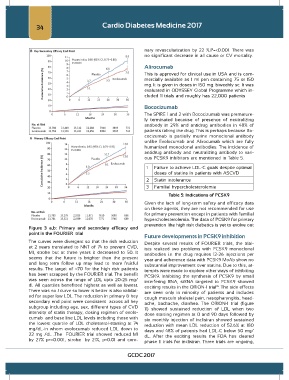
              Figure  3  a,b: Primary and secondary efficacy  end
              point in the FOURIER  trial
                                                                 Future developments in PCSK9 inhibition
              The curves were divergent so that the risk reduction   Despite  several  results  of FOURIER  trials, the trial-
              at 2 years  translated  to NNT  of  74 to prevent  CVD,   ists  realized  two problems  with  PCSK9 monoclonal
              MI, stroke  but at  three years  it decreased  to 50. It   antibodies i.e.  the drug  requires  12-26 injections per
              seems  that  the future is  brighter  than  the present   year and adherence data with PCSK9 MoAb show no
              and long  term follow  up may lead to more  fruitful   substantial improvement over statins. Due to this, at-
              results.  The target of <70 for  the high risk  patients   tempts were made to explore other ways of inhibiting
              has been scrapped by the FOURIER trial. The benefit   PCSK9.  Inhibiting  the  synthesis of PCSK9  by small
              was seen across the range of LDL upto 20-25 mg/    interfering  RNA,  siRNA  targeted  to PCSK9 showed
              dl. All quartiles benefitted highest as well as lowest.   exciting results in the ORION-1 trial . The side effects
                                                                                                15
              There was no J curve so lower is better is also validat-  are  seen  only in minority of patients and includes
              ed for super low LDL. The reduction in primary & key   cough musculo skeletal pain, nasopharyngitis, head-
              secondary end point were consistent  across all key   ache,  backache, diarrhea.  The  ORION-1 trial  (figure
              subgroup including age, sex, different types of CVD   11)  showed sustained reduction  of LDL when  two
              intensity of statin therapy, dosing regimen of evolo-  dose starting regimen at 0 and 90 days followed by
              cumab  and base line LDL levels including those with   six monthly injection of inclisiran showed sustained
              the lowest quartile  of LDL cholesterol-starting  at  74   reduction with mean LDL  reduction of 52.6% at 180
              mg/dL-in  whom evolocumab reduced LDL down  to     days and 48% of patients had LDL-C below 50 mg/
              22 mg /dL  .The  FOURIER  trial showed reduced MI   dL. After the  exciting results  the  FDA has cleared
              by 27% p=<0.001,  stroke   by 21%,  p=0.01 and coro-  phase II trials for inclisiran. Three trials are ongoing,


                                                         GCDC 2017

