


Page 78 - fbkCardioDiabetes_2017
P. 78
54                           Cardio Diabetes Medicine 2017


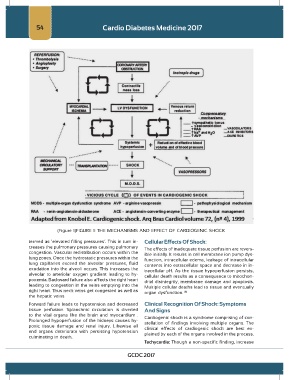
                          (Figure 1)FIGURE 1: THE MECHANISMS AND EFFECT OF CARDIOGENIC SHOCK

              termed as ‘elevated filling pressures’. This in turn in-  Cellular Effects Of Shock:
              creases the pulmonary pressures causing pulmonary   The effects of inadequate tissue perfusion are revers-
              congestion. Vascular redistribution occurs within the   ible initially. It results in cell membrane ion pump dys-
              lung zones. Once the hydrostatic pressures within the   function, intracellular edema, leakage of intracellular
              lung capillaries  exceed  the alveolar  pressures,  fluid   contents into extracellular space and decrease in in-
              exudation into the alveoli occurs. This increases the   tracellular pH. As the tissue hypoperfusion persists,
              alveolar  to arteriolar  oxygen  gradient  leading  to hy-  cellular death results as a consequence to mitochon-
              poxemia. Backward failure also affects the right heart   drial disintegrity, membrane damage and apoptosis.
              leading to congestion in the veins emptying into the   Multiple cellular deaths lead to tissue and eventually
              right heart. Thus neck veins get congested as well as   organ dysfunction.  (8)
              the hepatic veins.
              Forward failure leads to hypotension and decreased  Clinical Recognition Of Shock: Symptoms
              tissue  perfusion. Splanchnic circulation  is  diverted   And Signs
              to the  vital  organs  like  the  brain and  myocardium  .   Cardiogenic shock is a syndrome comprising of con-
              Prolonged hypoperfusion of the kidneys causes hy-  stellation of  findings  involving multiple  organs.  The
              poxic  tissue  damage and renal injury.  Likewise  all   clinical  effects of cardiogenic shock are best ex-
              end  organs  deteriorate  with  persisting  hypotension   plained by each of the organs involved in the process.
              culminating in death.
                                                                 Tachycardia: Though a non-specific finding, increase


                                                         GCDC 2017

