


Page 95 - fbkCardioDiabetes_2017
P. 95
The Applied Biochemical and                                          71
                                Metabolic Aspects of Diabetes and Heart


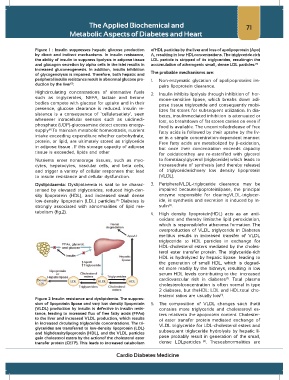
                 Figure  1 :  Insulin  suppresses  hepatic glucose  production   ofHDL particles by the liver and loss of apolipoprotein (Apo)
                 by  direct and  indirect mechanisms.  In insulin  resistance,   A, resulting in low HDLconcentrations. The triglyceride-rich
                 the ability of insulin to suppress lipolysis in adipose tissue   LDL  particle is  stripped of its  triglycerides,  resultingin  the
                 and glucagon secretion by alpha cells in the islet results in   accumulation of atherogenic small, dense LDL particles. (5)
                 increased gluconeogenesis.  In  addition, insulin  inhibition
                 of glycogenolysis  is  impaired. Therefore,  both hepatic and   The probable mechanisms are:
                 peripheral insulin resistance result in abnormal glucose pro-  1.   Non-enzymatic glycation of  apolipoproteins  im-
                 duction by the liver .                                pairs lipoprotein clearance.
                                (5)
                 Highcirculating concentrations  of alternative fuels   2.  Insulin inhibits lipolysis through inhibition of  hor-
                 such  as triglycerides,  NEFA, lactate  and  ketone   mone-sensitive  lipase,  which breaks  down adi-
                 bodies compete with glucose for uptake and in their   pose tissue triglyceride and consequently mobi-
                 presence,  glucose  clearance is  reduced. Insulin re-  lizes fat stores for subsequent utilization. In dia-
                 sistance is  a consequence of  ‘cellularsatiety’, seen   betes, insulinmediated inhibition is attenuated or
                 whenever  intracellular  sensors  such as  uridinedi-  lost, so breakdown of fat stores carries on even if
                 phosphate (UDP)-glucosamine detect excess energy-     food is available. The uncontrolledrelease of free
                 supply .To maintain metabolic homeostasis, nutrient   fatty acids is followed by their uptake by the liv-
                       (4)
                 intake exceeding expenditure whether carbohydrate,    er in a simple concentration-dependent manner.
                 protein,  or  lipid,  are  ultimately stored  as  triglyceride   Free  fatty  acids are metabolized  by  β-oxidation,
                 in adipose tissue . If this storage capacity of adipose   but  once their concentration exceeds  capacity
                 tissue is exceeded, lipids and other                  for  oxidationthey  are  re-esterified  with glycerol
                 Nutrients enter nonstorage tissues,  such  as myo-    to formtriacylglycerol (triglyceride) which leads to
                 cytes, hepatocytes, vascular  cells,  and beta cells,   increasedrate of synthesis (and thereby release)
                 and  trigger  a variety of cellular responses  that  lead   of triglyceriderichvery  low density lipoprotein
                 to insulin resistance and cellular dysfunction.       (VLDL).
                 Dyslipidaemia:  Dyslipidaemia  is said to be charac-  3.  PeripheralVLDL-triglyceride  clearance may  be
                 terised  by  elevated  triglycerides,  reduced high-den-  impaired  becauselipoproteinlipase,  the principal
                 sity  lipoprotein  (HDL), and increased  small  dense   enzyme responsible  for  clearingVLDL-triglycer-
                 low-density  lipoprotein  (LDL) particles. Diabetes is   ide, is synthesis and secretion is induced by In-
                                                    (6)
                                                                           (4)
                 strongly  associated with  abnormalities of lipid  me-  sulin .
                 tabolism (fig.2).                                  4.  High  density lipoprotein(HDL)  acts  as an anti-
                                                                       oxidant and thereby  limitsthe  lipid  peroxidation,
                                                                       which is responsiblefor atheroma formation. The
                                                                       overproduction of VLDL  triglyceride  in  Diabetes
                                                                       mellitus results  in increased transfer of VLDL
                                                                       triglyceride  to HDL  particles  in exchange for
                                                                       HDL-cholesterol  esters  mediated by  the choles-
                                                                       terol  ester  transfer  protein.  The  triglyceride-rich
                                                                       HDL is hydrolyzed  by hepatic  lipase   leading to
                                                                       the generation  of small  HDL,  which  is  degrad-
                                                                       ed  more  readily by  the kidneys,  resulting  in low
                                                                       serum HDL levels contributing to the  increased
                                                                       cardiovascular risk  in diabetes . Total plasma
                                                                                                     (9)
                                                                       cholesterolconcentration  is  often normal in type
                                                                       2 diabetes, but theHDL: LDL and HDL:total cho-
                                                                       lesterol ratios are usually low .
                                                                                                  (4)
                 Figure 2 Insulin resistance and dyslipidemia. The suppres-
                 sion  of lipoprotein  lipase  and  very low density  lipoprotein   5.  The  composition of VLDL  changes such  thatit
                 (VLDL)  production by  insulin  is defective in insulin  resis-  contains  more triglyceride  and  cholesteroyl  es-
                 tance, leading to increased flux of free fatty  acids (FFAs)   ters relativeto the apoprotein content. Cholester-
                 to the liver  and  increased VLDL  production, which  results   ol  ester  transfer  protein–mediated exchange of
                 in increased circulating triglyceride concentrations. The tri-  VLDL triglyceride for LDL-cholesterol esters and
                 glycerides  are  transferred to low-density lipoprotein  (LDL)
                 and  highdensitylipoprotein  (HDL),  and  the VLDL  particles   subsequent triglyceride  hydrolysis  by  hepatic li-
                 gain cholesterol esters by the actionof the cholesterol ester   pase  probably  result in generation of the  small,
                 transfer protein (CETP). This leads to increased catabolism   dense  LDLparticles   (6) .  Theseabnormalities  are

                                                    Cardio Diabetes Medicine

