


Page 180 - Critical Care Nursing Demystified
P. 180
Chapter 4  CARE OF THE PATIENT WITH CRITICAL CARDIAC RHY THM DISTURBANCE NEEDS        165


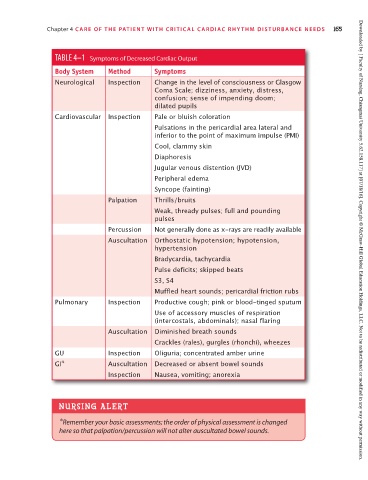
                               TABLE 4–1  Symptoms of Decreased Cardiac Output
                               Body System    Method       Symptoms
                               Neurological   Inspection   Change in the level of consciousness or Glasgow
                                                           Coma Scale; dizziness, anxiety, distress,
                                                           confusion; sense of impending doom;
                                                           dilated pupils
                               Cardiovascular  Inspection  Pale or bluish coloration
                                                           Pulsations in the pericardial area lateral and
                                                           inferior to the point of maximum impulse (PMI)
                                                           Cool, clammy skin
                                                           Diaphoresis
                                                           Jugular venous distention (JVD)
                                                           Peripheral edema
                                                           Syncope (fainting)
                                              Palpation    Thrills/bruits
                                                           Weak, thready pulses; full and pounding
                                                           pulses
                                              Percussion   Not generally done as x-rays are readily available
                                              Auscultation  Orthostatic hypotension; hypotension,                   Downloaded by [ Faculty of Nursing, Chiangmai University 5.62.158.117] at [07/18/16]. Copyright © McGraw-Hill Global Education Holdings, LLC. Not to be redistributed or modified in any way without permission.
                                                           hypertension
                                                           Bradycardia, tachycardia
                                                           Pulse deficits; skipped beats
                                                           S3, S4
                                                           Muffled heart sounds; pericardial friction rubs
                               Pulmonary      Inspection   Productive cough; pink or blood-tinged sputum
                                                           Use of accessory muscles of respiration
                                                           (intercostals, abdominals); nasal flaring
                                              Auscultation  Diminished breath sounds
                                                           Crackles (rales), gurgles (rhonchi), wheezes
                               GU             Inspection   Oliguria; concentrated amber urine
                               GI ∗           Auscultation  Decreased or absent bowel sounds
                                              Inspection   Nausea, vomiting; anorexia


                                 NURSING ALERT
                                 * Remember your basic assessments; the order of physical assessment is changed
                                 here so that palpation/percussion will not alter auscultated bowel sounds.

