


Page 292 - Critical Care Nursing Demystified
P. 292
Chapter 6  CARE OF THE  TRAUMATIZED PATIENT        277


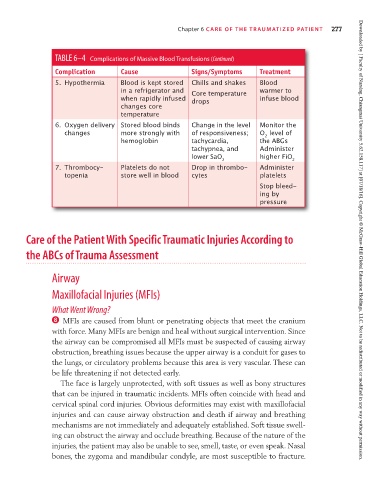
                               TABLE 6–4  Complications of Massive Blood Transfusions (Continued)
                               Complication       Cause               Signs/Symptoms     Treatment
                               5.  Hypothermia    Blood is kept stored  Chills and shakes  Blood
                                                  in a refrigerator and   Core temperature   warmer to
                                                  when rapidly infused   drops           infuse blood
                                                  changes core
                                                    temperature
                               6.  Oxygen delivery  Stored blood binds   Change in the level   Monitor the
                                  changes         more strongly with   of responsiveness;   O  level of
                                                                                          2
                                                  hemoglobin          tachycardia,       the ABGs
                                                                        tachypnea, and   Administer
                                                                        lower SaO        higher FiO
                                                                              2                   2
                               7.  Thrombocy-     Platelets do not    Drop in thrombo-   Administer
                                  topenia         store well in blood  cytes             platelets
                                                                                         Stop bleed-
                                                                                         ing by
                                                                                           pressure


                       Care of the Patient With Specific Traumatic Injuries According to                            Downloaded by [ Faculty of Nursing, Chiangmai University 5.62.158.117] at [07/18/16]. Copyright © McGraw-Hill Global Education Holdings, LLC. Not to be redistributed or modified in any way without permission.
                       the ABCs of Trauma Assessment


                               Airway

                               Maxillofacial Injuries (MFIs)

                               What Went Wrong?
                               8    MFIs are caused from blunt or penetrating objects that meet the cranium
                               with force. Many MFIs are benign and heal without surgical intervention. Since
                               the airway can be compromised all MFIs must be suspected of causing airway
                               obstruction, breathing issues because the upper airway is a conduit for gases to
                               the lungs, or circulatory problems because this area is very vascular. These can
                               be life threatening if not detected early.
                                 The face is largely unprotected, with soft tissues as well as bony structures
                               that can be injured in traumatic incidents. MFIs often coincide with head and
                               cervical spinal cord injuries. Obvious deformities may exist with maxillofacial
                               injuries and can cause airway obstruction and death if airway and breathing
                               mechanisms are not immediately and adequately established. Soft tissue swell-
                               ing can obstruct the airway and occlude breathing. Because of the nature of the
                               injuries, the patient may also be unable to see, smell, taste, or even speak. Nasal
                               bones, the zygoma and mandibular condyle, are most susceptible to fracture.

