


Page 1006 - Hall et al (2015) Principles of Critical Care-McGraw-Hill
P. 1006
CHAPTER 80: Viral Hemorrhagic Fevers  737


                                                                          liver. YFV infects first the Kupffer cells then the hepatocytes, resulting
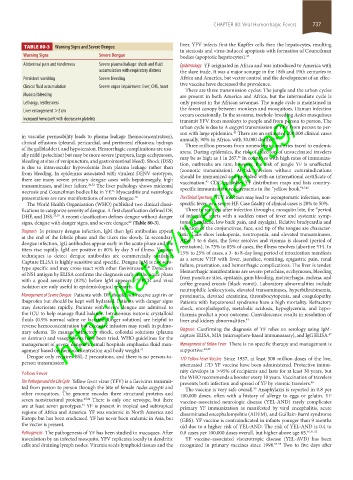
                      TABLE 80-3    Warning Signs and Severe Dengue
                                                                          in steatosis and virus-induced apoptosis with formation of Councilman
                    Warning Signs             Severe Dengue               bodies (apoptotic hepatocytes). 45
                    Abdominal pain and tenderness  Severe plasma leakage: shock and fluid   Epidemiology  YF originated in Africa and was introduced to America with
                                              accumulation with respiratory distress  the slave trade. It was a major scourge in the 18th and 19th centuries in
                    Persistent vomiting       Severe bleeding             Africa and America, but vector control and the development of an effec-
                                                                          tive vaccine have decreased the prevalence.
                    Clinical fluid accumulation  Severe organ impairment: liver, CNS, heart
                                                                           There are three transmission cycles: The jungle and the urban cycles
                    Mucosal bleeding                                      are present in both America and Africa, but the intermediate cycle is
                    Lethargy, restlessness                                only present in the African savannas. The jungle cycle is maintained in
                                                                          the forest canopy between monkeys and mosquitoes. Human infection
                                  https://kat.cr/user/tahir99/
                    Liver enlargement >2 cm
                                                                          occurs occasionally. In the savanna, treehole-breeding Aedes mosquitoes
                    Increased hematocrit with decrease in platelets       transmit YFV from monkeys to people and from person to person. The
                                                                          urban cycle is due to A aegypti transmission of YFV from person to per-
                                                                          son with large epidemics.  There are an estimated 200,000 clinical cases
                                                                                            43
                    in vascular permeability leads to plasma leakage (hemoconcentration),   annually, 90% in Africa, with 30,000 deaths. 8,46
                    clinical effusions (pleural, pericardial, and peritoneal effusions; hydrops   Three million persons from nonendemic countries travel to endemic
                    of the gallbladder), and hypotension. Hemorrhagic complications are usu-  areas. During epidemics, the risk of infection of unvaccinated travelers
                    ally mild (petechiae) but may be more severe (purpura, large ecchymoses,   may be as high as 1 in 267.  In countries with high rates of immuniza-
                                                                                             46
                    bleeding at sites of venipuncture, and gastrointestinal bleed). Shock (DSS)   tion, outbreaks are rare; however, the risk of jungle YF is unaffected
                    is due to intravascular hypovolemia from plasma leakage rather than   (zoonotic transmission). At-risk travelers without contraindications
                    from bleeding. In epidemics associated with virulent DENV serotypes,   should be immunized and provided with an international certificate of
                    there are many severe primary dengue cases with hepatomegaly, high   vaccination.  CDC publishes YF distribution maps and lists country-
                                                                                  43
                    transaminases, and liver failure. 26,32  The liver pathology shows midzonal   specific immunization requirements in the “yellow book.” 47,48
                    necrosis and Councilman bodies like in YF.  Myocarditis and neurologic
                                                  26
                    presentations are rare manifestations of severe dengue. 38  The Clinical Spectrum  YFV infection may lead to asymptomatic infection, non-
                     The World Health Organization (WHO) published two clinical classi-  specific fever, or a severe HF. Case fatality of clinical cases is 20% to 50%.
                    fications to categorize severity of dengue. A first classification defined DF,   Three to six days after infection through a mosquito bite, the “period
                    DHF, and DSS. 33,39  A recent classification defines dengue without danger   of infection” starts with a sudden onset of fever and systemic symp-
                                                        40
                    signs, dengue with danger signs, and severe dengue  (Table 80-3).  toms (headache, low back pain, and myalgia). Relative bradycardia and
                    Diagnosis  In primary dengue infection, IgM then IgG antibodies appear   injection of the conjunctivae, face, and tip of the tongue are character-
                                                                          istic. Labs show leukopenia, neutropenia, and elevated transaminases.
                    at the end of the febrile phase and the titers rise slowly. In secondary
                    dengue infection, IgG antibodies appear early in the acute phase and the   After 3 to 6 days, the fever resolves and viremia is cleared (period of
                                                                            remission). In 75% to 85% of cases, the illness resolves (abortive YF). In
                    titers rise rapidly. IgM are positive in 80% by day 5 of illness. Various
                    techniques to detect dengue antibodies are commercially available:   15% to 25% of cases, a 3- to 8-day long period of intoxication manifests
                                                                          as a severe VHF with fever, jaundice, vomiting, epigastric pain, renal
                    Capture ELISA is highly sensitive and specific. Dengue IgM is not sero-
                    type specific and may cross-react with other flaviviruses. 25,41  Detection   failure, prostration, and hemorrhagic complications. The liver is tender.
                                                                          Hemorrhagic manifestations are severe: petechiae, ecchymoses, bleeding
                    of NS1 antigen by ELISA confirms the diagnosis early in the acute phase
                    with a good sensitivity (82%) before IgM appears. 25,41  PCR and viral   from puncture sites, epistaxis, gum bleeding, metrorrhagia, melena, and
                                                                          coffee ground emesis (black vomit). Laboratory abnormalities include
                    isolation are only useful in epidemiological research.
                                                                          neutrophilic leukocytosis,  elevated transaminases, hyperbilirubinemia,
                    Management of Severe Dengue  Patients with DF should not receive aspirin or   proteinuria, elevated  creatinine, thrombocytopenia, and coagulopathy.
                    ibuprofen but should be kept well hydrated. Patients with danger signs   Patients with hepatorenal syndrome have a high mortality. Refractory
                    may deteriorate rapidly. Patients with severe dengue are admitted to   shock, encephalopathy, metabolic acidosis, hypoglycemia, and hypo-
                    the ICU to help manage fluid balance. Intravenous isotonic crystalloid   thermia predict a poor outcome. Convalescence results in resolution of
                    fluids (0.9% normal saline or lactated Ringer solution) are helpful to   liver and kidney abnormalities. 43
                    reverse hemoconcentration but excessive infusion may result in pulmo-
                    nary edema. To manage refractory shock, colloidal solutions (plasma   Diagnosis  Confirming the diagnosis of YF relies on serology using IgM-
                                                                          capture ELISA, MIA (microsphere-based immunoassay), and IgG ELISA.
                                                                                                                            47
                    or dextran) and vasopressors have been tried. WHO guidelines for the
                    management of severe dengue in small hospitals emphasize fluid man-  Management of Yellow Fever  There is no specific therapy and management is
                    agement based on hemoconcentration and body weight. 42  supportive. 43,49
                     Dengue only requires BSL-2 precautions, and there is no person-to-  17D Yellow Fever Vaccine  Since 1937, at least 500 million doses of the live,
                    person transmission.                                  attenuated 17D YF vaccine have been administered. Protective immu-
                                                                          nity develops in >95% of recipients and lasts for at least 30 years, but
                    Yellow Fever                                          the WHO recommends a booster every 10 years. Vaccination of travelers
                    The Pathogen and the Life Cycle  Yellow fever virus (YFV) is a flavivirus transmit-  prevents both infection and spread of YF by viremic travelers. 46
                    ted from person to person through the bite of female Aedes aegypti and   The vaccine is very safe overall.  Anaphylaxis is reported in 0.8 per
                                                                                                   50
                    other mosquitoes. The genome encodes three structural proteins and   100,000 doses, often with a history of allergy to eggs or gelatin. YF
                    seven nonstructural  proteins. 43,44   There  is only one serotype,  but  there   vaccine–associated neurologic disease (YEL-AND) rarely complicates
                    are at least seven genotypes.  YF is present in tropical and subtropical   primary YF immunization as manifested by viral encephalitis, acute
                                        44
                    regions of Africa and America. YF was endemic in North America and   disseminated encephalomyelitis (ADEM), and Guillain-Barré syndrome
                    Europe but has been eradicated. YF has never been endemic in Asia, but   (GBS). YF vaccine is contraindicated in infants younger than 9 months
                    the vector is present.                                old due to a higher risk of YEL-AND. The risk of YEL-AND is 0.4 to
                    Pathogenesis  The pathogenesis of YF has been studied in macaques. After   0.8 cases per 100,000 doses overall, but higher above age 65. 46,51,52
                    inoculation by an infected mosquito, YFV replicates locally in dendritic   YF vaccine–associated viscerotropic disease (YEL-AVD) has been
                    cells and draining lymph nodes. Viremia seeds lymphoid tissues and the   recognized in primary vaccines since 1998. 53-55  Two to five days after


            section05_c74-81.indd   737                                                                                1/23/2015   12:37:42 PM

