


Page 585 - Hall et al (2015) Principles of Critical Care-McGraw-Hill
P. 585
CHAPTER 47: Upper Airway Obstruction  405


                                                                          greater than 4000 predict turbulent flow. The driving pressure for laminar
                                                                          flow is proportional to the flow rate and inversely related to the fourth
                                                                          power of the radius, among other factors. Thus a relatively minor decrease
                                                                          in the radius of a tube like the upper airway causes a large increase in the
                                                                          driving pressure necessary to achieve the same flow rate. Turbulent flow
                                                                          as occurs in a rough tube like the larynx and trachea requires greater
                                                                          driving pressure than laminar flow, being proportional to the density of
                                                                          the gas and the square of the flow rate. Inhalation of a low-density gas
                                                                          such as helium therefore decreases the driving pressure required for air-
                              Hyoid                                       flow through two mechanisms: reducing the Reynolds number, thereby
                                                                          increasing the proportion of flow that is laminar; and decreasing the
                             Epiglottis                                   density-dependent driving pressure where turbulent flow exists. 4
                                                                           The clinical implications of these principles are as follows: (1) Upper
                          Aryepiglottic                                   airway obstructing lesions, once symptomatic, can progress rapidly to a
                              fold                                        crisis, with relatively small increases in size leading to proportionately
                                                                          greater increases in the work of breathing; (2) the inhalation of a low-
                                                  Vestibule               sure required for a given airflow. Helium-oxygen mixtures therefore may
                          Arytenoid                                       density gas mixture such as helium-oxygen decreases the driving pres-
                                                                          act to stabilize the airway in marginally compensated patients, bridging
                          Vestibular                                      the patient toward definitive treatment of the upper airway obstruction.
                            fold                                           Upper airway obstructing lesions may limit inspiratory flow, expi-
                                          Ventricle                       ratory flow, or both, depending on the site and nature of the lesion.
                                                                            Flow-volume loops obtained by spirometry are useful for understanding
                           Vocal cord
                                                                          the physiology of different sites of upper airway obstruction. 5
                                               Infraglottic                   ■  VARIABLE EXTRATHORACIC OBSTRUCTION
                              Thyrid            cavity                    During normal inspiration the intrathoracic airways dilate, while the
                             cartillage
                                                                          extrathoracic airways tend to collapse as the increase in gas velocity
                                                                          causes a fall in intraluminal pressure (Bernoulli effect). As gas veloc-
                                                                          ity increases past an obstructing lesion, this effect is increased, causing
                                                                          dynamic collapse of the nonrigid airway and flow limitation, with a
                             Cricoid                                      reduction in peak inspiratory flow and a flattening of the inspiratory
                                                                          limb of the flow volume loop. In contrast, during forced expiration the
                                                                          intraluminal pressure is positive relative to the atmosphere, preserving
                                                                          expiratory flow. These lesions occur above the thoracic inlet and include
                                                                          bilateral vocal cord paralysis, paradoxical movement of the vocal cords,
                                                                          and tracheomalacia of the extrathoracic airway.
                                                                              ■  VARIABLE INTRATHORACIC OBSTRUCTION
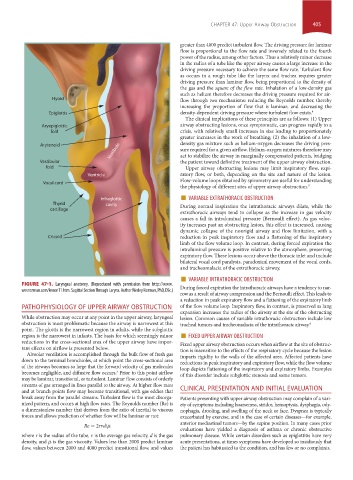
                    FIGURE  47-1.  Laryngeal anatomy. (Reproduced with permission from  http://www.  During forced expiration the intrathoracic airways have a tendency to nar-
                    wesnorman.com/lesson11.htm. Sagittal Section Through Larynx. Author Wesley Norman, PhD, DSc.)
                                                                          row as a result of airway compression and the Bernoulli effect. This leads to
                                                                          a reduction in peak expiratory flow and a flattening of the expiratory limb
                    PATHOPHYSIOLOGY OF UPPER AIRWAY OBSTRUCTION           of the flow volume loop. Inspiratory flow, in contrast, is preserved as lung
                                                                          expansion increases the radius of the airway at the site of the obstructing
                    While obstruction may occur at any point in the upper airway, laryngeal   lesion. Common causes of variable intrathoracic obstruction include low
                    obstruction is most problematic because the airway is narrowest at this   tracheal tumors and tracheomalacia of the intrathoracic airway. 6
                    point. The glottis is the narrowest region in adults, while the subglottic
                    region is the narrowest in infants. The basis for which seemingly minor     ■  FIXED UPPER AIRWAY OBSTRUCTION
                    reductions in the cross-sectional area of the upper airway have impor-  Fixed upper airway obstruction occurs when airflow at the site of obstruc-
                    tant effects on airflow is presented below.           tion is insensitive to the effects of the respiratory cycle because the lesion
                     Alveolar ventilation is accomplished through the bulk flow of fresh gas   imparts rigidity to the walls of the affected area. Affected patients have
                    down to the terminal bronchioles, at which point the cross-sectional area   reductions in peak inspiratory and expiratory flow, while the flow volume
                    of the airways becomes so large that the forward velocity of gas molecules   loop depicts flattening of the inspiratory and expiratory limbs. Examples
                    becomes negligible, and diffusive flow occurs.  Prior to this point airflow   of this disorder include subglottic stenosis and some tumors.
                                                    3
                    may be laminar, transitional, or turbulent. Laminar flow consists of orderly
                    streams of gas arranged in lines parallel to the airway. At higher flow rates
                    and at branch points flow may become transitional, with gas eddies that   CLINICAL PRESENTATION AND INITIAL EVALUATION
                    break away from the parallel streams. Turbulent flow is the most disorga-  Patients presenting with upper airway obstruction may complain of a vari-
                    nized pattern, and occurs at high flow rates. The Reynolds number (Re) is   ety of symptoms including hoarseness, stridor, hemoptysis, dysphagia, ody-
                    a dimensionless number that derives from the ratio of inertial to viscous   nophagia, drooling, and swelling of the neck or face. Dyspnea is typically
                    forces and allows prediction of whether flow will be laminar or not:  exacerbated by exercise, and in the case of certain diseases—for example,
                                                                          anterior mediastinal tumors—by the supine position. In many cases prior
                                         Re = 2rvd/μ
                                                                          evaluations have yielded a diagnosis of asthma or chronic obstructive
                    where r is the radius of the tube, v is the average gas velocity, d is the gas   pulmonary disease. While certain disorders such as epiglottitis have very
                    density, and μ is the gas viscosity. Values less than 2000 predict laminar   acute presentations, at times symptoms have developed so insidiously that
                    flow, values between 2000 and 4000 predict transitional flow, and values   the patient has habituated to the condition, and has few or no complaints.


            section04.indd   405                                                                                       1/23/2015   2:19:01 PM

