


Page 667 - Hall et al (2015) Principles of Critical Care-McGraw-Hill
P. 667
486     PART 4: Pulmonary Disorders


                                              Resistive loads                      Depressed drive
                                        Bronchospasm                           Drug overdose
                                        Airway edema, secretions, scarring     Brain-stem lesion
                                        Upper airway obstruction               Sleep disordered breathing
                                        Obstructive sleep apnea                Hypothyroidism


                           Lung elastic loads
                            PEEPi
                            Alveolar edema                                                    Impaired neuromuscular
                            Infection                                                              transmission
                            Atelectasis
                                                                                              Phrenic nerve injury
                                                                                              Cord lesion
                                                                                              Neuromuscular blockers
                           Chest wall elastic loads                                           Aminoglycosides
                            Pleural effusion            Load                 Strength          Guillain-Barré syndrome
                            Pneumothorax                                                      Myasthenia gravis
                            Rib fracture                                                      Amyotrophic lateral sclerosis
                            Tumor                                                             Botulism
                            Obesity
                            Ascites
                            Abdominal distention

                                                                                  Muscle weakness
                                                                                Fatigue
                                         Minute ventilation loads               Electrolyte derangement
                                           Sepsis                               Malnutrition
                                           Pulmonary embolus                    Hypoperfusion states
                                           Hypovolemia                          Hypoxemia
                                           Excess carbohydrates                 Myopathy
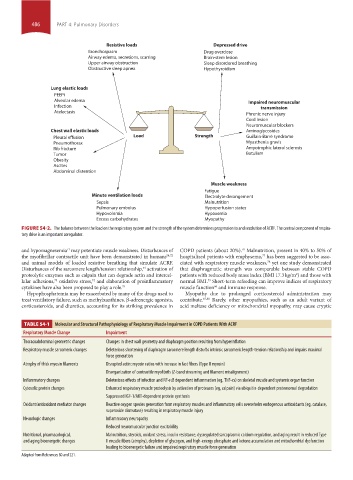
                 FIGURE 54-2.  The balance between the load on the respiratory system and the strength of the system determines progression to and resolution of ACRF. The central component of respira-
                 tory drive is an important coregulator.

                                 71
                                                                                            76
                 and hypomagnesemia  may potentiate muscle weakness. Disturbances of   COPD patients (about 20%).  Malnutrition, present in 40% to 50% of
                 the myofibrillar contractile unit have been demonstrated in humans 54,72    hospitalized patients with emphysema,  has been suggested to be asso-
                                                                                                   77
                 and animal models of loaded resistive breathing that simulate ACRF.   ciated with respiratory muscle weakness,  yet one study demonstrated
                                                                                                     78
                 Disturbances of the sarcomere length/tension relationship,  activation of   that diaphragmatic strength was comparable between stable COPD
                                                           54
                                                                                                               2
                 proteolytic enzymes such as calpain that can degrade actin and intercel-  patients with reduced body mass index (BMI 17.3 kg/m ) and those with
                 lular adhesions,  oxidative stress,  and elaboration of proinflammatory   normal BMI.  Short-term refeeding can improve indices of respiratory
                                         74
                                                                                 79
                            73
                                                                                   66
                 cytokines have also been proposed to play a role. 75  muscle function  and immune response.
                   Hypophosphatemia may be exacerbated by many of the drugs used to   Myopathy due to prolonged corticosteroid administration may
                 treat ventilatory failure, such as methylxanthines, β-adrenergic agonists,     contribute. 67,80  Rarely, other myopathies, such as an adult variant of
                 corticosteroids, and diuretics, accounting for its striking prevalence in   acid maltase deficiency or mitochondrial myopathy, may cause cryptic
                   TABLE 54-1    Molecular and Structural Pathophysiology of Respiratory Muscle Impairment in COPD Patients With ACRF
                  Respiratory Muscle Change   Impairment
                  Thoracoabdominal geometric changes  Changes in chest wall geometry and diaphragm position resulting from hyperinflation
                  Respiratory muscle sarcomeric changes  Deleterious shortening of diaphragm sarcomere length disturbs intrinsic sarcomeric length-tension relationship and impairs maximal
                                              force generation
                  Atrophy of thick myosin filaments  Disrupted actin: myosin ratios with increase in fast fibers (Type II myosin)
                                              Disorganization of contractile myofibrils (Z-band streaming and filament misalignment)
                  Inflammatory changes        Deleterious effects of infection and NF-κB dependent inflammation (eg, TNF-α) on skeletal muscle and systemic organ function
                  Cytosolic protein changes   Enhanced respiratory muscle proteolysis by activation of proteases (eg, calpain) via ubiquitin-dependent proteosomal degradation
                                              Suppressed IGF-1/AKT-dependent protein synthesis
                  Oxidant/antioxidant mediator changes  Reactive oxygen species generation from respiratory muscles and inflammatory cells overwhelm endogenous antioxidants (eg, catalase,
                                              superoxide dismutase) resulting in respiratory muscle injury
                  Neurologic changes          Inflammatory neuropathy
                                              Reduced neuromuscular junction excitability
                  Nutritional, pharmacological,    Malnutrition, steroids, oxidant stress, insulin resistance, dysregulated sarcoplasmic calcium regulation, and aging result in reduced Type
                  and aging bioenergetic changes  II muscle fibers (atrophy), depletion of glycogen, and high-energy phosphate and ketone accumulation and mitochondrial dysfunction
                                              leading to bioenergetic failure and impaired respiratory muscle force generation
                 Adapted from References 80 and 221.


            section04.indd   486                                                                                       1/23/2015   2:20:07 PM

