


Page 704 - Hall et al (2015) Principles of Critical Care-McGraw-Hill
P. 704
CHAPTER 59: Ventilator-Associated Pneumonia  523


                                                                          to our data on 567 ventilated patients, those who had received antimi-
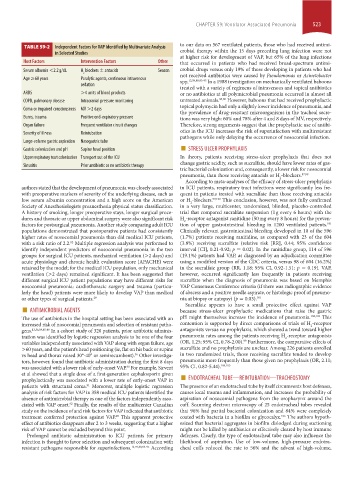
                      TABLE 59-2     Independent Factors for VAP Identified by Multivariate Analysis
                               in Selected Studies                        crobial therapy within the 15 days preceding lung infection were not
                                                                          at higher risk for development of VAP, but 65% of the lung infections
                    Host Factors        Intervention Factors      Other   that occurred in patients who had received broad-spectrum antimi-
                    Serum albumin <2.2 g/dL  H  blockers ± antacids  Season  crobial drugs versus only 19% of those developing in patients who had
                                         2                                not received antibiotics were caused by Pseudomonas or Acinetobacter
                    Age ≥60 years       Paralytic agents, continuous intravenous   spp. 12,59,88,93-95  In a 1988 investigation on mechanically ventilated baboons
                                        sedation
                                                                          treated with a variety of regimens of intravenous and topical antibiotics
                    ARDS                >4 units of blood products        or no antibiotics at all polymicrobial pneumonia occurred in almost all
                    COPD, pulmonary disease  Intracranial pressure monitoring  untreated animals. 95,96  However, baboons that had received prophylactic
                                                                          topical polymycin had only a slightly lower incidence of pneumonia, and
                    Coma or impaired consciousness MV >2 days
                                                                          the prevalence of drug-resistant microorganisms in the tracheal secre-
                    Burns, trauma       Positive end-expiratory pressure  tions was very high: 60% and 78% after 4 and 8 days of MV, respectively.
                    Organ failure       Frequent ventilator circuit changes  Therefore, strong arguments suggest that the prophylactic use of antibi-
                                                                          otics in the ICU increases the risk of superinfection with multiresistant
                    Severity of illness  Reintubation
                                                                          pathogens while only delaying the occurrence of nosocomial infection.
                    Large-volume gastric aspiration  Nasogastric tube
                    Gastric colonization and pH  Supine head position         ■  STRESS ULCER PROPHYLAXIS
                    Upper respiratory tract colonization Transport out of the ICU  In theory, patients receiving stress-ulcer prophylaxis that does not
                                                                          change gastric acidity, such as sucralfate, should have lower rates of gas-
                    Sinusitis           Prior antibiotic or no antibiotic therapy
                                                                          tric bacterial colonization and, consequently, a lower risk for nosocomial
                                                                          pneumonia, than those receiving antacids or H -blockers. 97,98
                                                                                                            2
                                                                           According to meta-analyses of the efficacy of stress-ulcer prophylaxis
                    authors stated that the development of pneumonia was closely associated   in ICU patients, respiratory tract infections were significantly less fre-
                    with preoperative markers of severity of the underlying disease, such as   quent in patients treated with sucralfate than those receiving antacids
                    low serum albumin concentration and a high score on the American   or H -blockers. 99,100  This conclusion, however, was not fully confirmed
                                                                             2
                    Society of Anesthesiologists preanesthesia physical status classification.   in a very large, multicenter, randomized, blinded, placebo-controlled
                    A history of smoking, longer preoperative stays, longer surgical proce-  trial that compared sucralfate suspension (1 g every 6 hours) with the
                    dures and thoracic or upper abdominal surgery were also significant risk   H -receptor antagonist ranitidine (50 mg every 8 hours) for the preven-
                                                                           2
                    factors for postsurgical pneumonia. Another study comparing adult ICU   tion of  upper gastrointestinal bleeding in  1200 ventilated patients.
                                                                                                                            101
                    populations demonstrated that postoperative patients had consistently   Clinically relevant gastrointestinal bleeding developed in 10 of the 596
                    higher rates of nosocomial pneumonia than did medical ICU patients,   (1.7%)  patients  receiving  ranitidine,  as  compared  with  23  of  the  604
                    with a risk ratio of 2.2.  Multiple regression analysis was performed to   (3.8%) receiving sucralfate (relative risk [RR], 0.44; 95% confidence
                                    82
                    identify independent predictors of nosocomial pneumonia in the two   interval [CI], 0.21-0.92; p = 0.02). In the ranitidine group, 114 of 596
                    groups; for surgical ICU patients, mechanical ventilation (>2 days) and   (19.1%) patients had VAP, as diagnosed by an adjudication committee
                    acute physiology and chronic health evaluation score (APACHE) were   using a modified version of the CDC criteria, versus 98 of 604 (16.2%)
                    retained by the model; for the medical ICU population, only mechanical   in the sucralfate group (RR, 1.18; 95% CI, 0.92-1.51; p = 0.19). VAP,
                    ventilation (>2 days) remained significant. It has been suggested that   however,  occurred  significantly  less  frequently  in  patients  receiving
                    different surgical ICU patient populations may have different risks for   sucralfate when the diagnosis of pneumonia was based on Memphis
                    nosocomial pneumonia: cardiothoracic surgery and trauma (particu-  VAP Consensus Conference criteria (if there was radiographic evidence
                    larly the head) patients were more likely to develop VAP than medical   of abscess and a positive needle aspirate, or histologic proof of pneumo-
                    or other types of surgical patients. 29               nia at biopsy or autopsy) (p = 0.03). 101
                        ■  ANTIMICROBIAL AGENTS                           because  stress-ulcer  prophylactic  medications  that  raise  the  gastric
                                                                           Sucralfate  appears  to  have  a  small  protective  effect  against  VAP

                    The use of antibiotics in the hospital setting has been associated with an   pH  might themselves  increase  the  incidence  of  pneumonia. 102,103   This
                    increased risk of nosocomial pneumonia and selection of resistant patho-  contention is supported by direct comparisons of trials of H -receptor
                                                                                                                      2
                    gens. 13,36,59,85-89  In a cohort study of 320 patients, prior antibiotic adminis-  antagonists versus no prophylaxis, which showed a trend toward higher
                    tration was identified by logistic regression analysis to be one of the four   pneumonia rates among the patients receiving H -receptor antagonists
                                                                                                             2
                                                                                               99
                    variables independently associated with VAP along with organ failure, age   (OR, 1.25; 95% CI, 0.78-2.00).  Furthermore, the comparative effects of
                    >60 years, and the patient’s head positioning (ie, flat on his back or supine   sucralfate and no prophylaxis are unclear. Among 226 patients enrolled
                                                          36
                    vs head and thorax raised 30°-40° or semirecumbent).  Other investiga-  in two randomized trials, those receiving sucralfate tended to develop
                    tors, however, found that antibiotic administration during the first 8 days   pneumonia more frequently than those given no prophylaxis (OR, 2.11;
                    was associated with a lower risk of early-onset VAP.  For example, Sirvent   95% CI, 0.82-5.44). 104,105
                                                       90
                    prophylactically was associated with a lower rate of early-onset VAP in   ■  ENDOTRACHEAL TUBE—REINTUBATION—TRACHEOSTOMY
                    et al showed that a single dose of a first-generation cephalosporin given
                    patients with structural coma.  Moreover,  multiple logistic regression   The presence of an endotracheal tube by itself circumvents host defenses,
                                          91
                    analysis of risk factors for VAP in 358 medical ICU patients identified the   causes local trauma and inflammation, and increases the probability of
                    absence of antimicrobial therapy as one of the factors independently asso-  aspiration of nosocomial pathogens from the oropharynx around the
                                    92
                    ciated with VAP onset.  Finally, the results of the multicenter Canadian   cuff. Scanning electron microscopy of 25 endotracheal tubes revealed
                    study on the incidence of and risk factors for VAP indicated that antibiotic   that 96% had partial bacterial colonization and 84% were completely
                                                    29
                    treatment conferred protection against VAP.  This apparent protective   coated with bacteria in a biofilm or glycocalyx.  The authors hypoth-
                                                                                                            106
                    effect of antibiotics disappears after 2 to 3 weeks, suggesting that a higher   esized that bacterial aggregates in biofilm dislodged during suctioning
                    risk of VAP cannot be excluded beyond this point.     might not be killed by antibiotics or effectively cleared by host immune
                     Prolonged antibiotic administration to ICU patients for primary   defenses. Clearly, the type of endotracheal tube may also influence the
                    infection is thought to favor selection and subsequent colonization with   likelihood of aspiration. Use of low-volume, high-pressure endotra-
                    resistant pathogens responsible for superinfections. 12,59,88,93-95  According   cheal cuffs reduced the rate to 56% and the advent of high-volume,


            section04.indd   523                                                                                       1/23/2015   2:20:32 PM

