


Page 874 - Hall et al (2015) Principles of Critical Care-McGraw-Hill
P. 874
CHAPTER 68: Approach to Infection in Patients Receiving Cytotoxic Chemotherapy for Malignancy       605


                    reviews with meta-analyses have suggested an enhanced risk for serious   that occurs during the second and third weeks. This stage is character-
                    grade 3 to 4 infectious complications associated with the use of rituximab   ized histologically by cellular necrosis, lack of mitotic activity, and focal
                    for maintenance therapy in non-Hodgkin lymphoma patients. 87,88  Case   loss of villous surfaces and clinically by abdominal pain, diarrhea, elec-
                    reports and small series have reported some opportunistic infections   trolyte loss, and invasive infection. The third stage of cellular regenera-
                    associated with the use of rituximab, including tuberculosis, progressive   tion occurs after the third week and is characterized by resumption of
                    multifocal leukoencephalopathy, babesiosis, pulmonary  Pneumocystis   mitotic activity and cellular proliferation in the crypts with subsequent
                    jirovecii infection, enteroviral gastroenteritis, cytomegalovirus infection,   repopulation of the denuded surfaces by differentiated cells.
                    reactivation of hepatitis B virus infection, disseminated varicella-zoster,   The maximum cytotoxic therapy–induced intestinal epithelial damage
                    and parvovirus B19–related pure red cell aplasia.     occurs in the second week between days 10 and 14. 93-95  This corresponds
                                                                          to the median time of onset of bacteremic infection on day 14 due to the
                    Integumental Barriers:  Integumental barriers are among the most   microorganisms that normally colonize these surfaces.  To a limited
                                                                                                                  96
                    important and most often damaged defense systems for cancer   extent, the type of pathogens recovered in bacteremic infections can
                    patients. These barriers include the epithelial surfaces of the skin, the   be predicted from the pool of microorganisms colonizing damaged
                    upper and lower respiratory tract, the upper and lower gastrointestinal   mucosal surfaces. Oral mucosal ulceration, particularly that involving
                    (GI) tract, and the mucosal surfaces lining the genitourinary tract. In   periodontal tissues, is often associated with viridans group streptococcal
                    critically ill patients, the barrier function of these surfaces may also be   bacteremia. 97,98  Colonic mucosal damage is more likely to be associated
                    compromised by procedures such as percutaneous intravenous cath-  with aerobic gram-negative bacillary infection with  Escherichia coli,
                    eterization, endotracheal intubation, endoscopic procedures, nasogas-  Klebsiella  species,  Pseudomonas  aeruginosa,  or  opportunistic  yeasts
                    tric intubation, and indwelling urinary catheterization (Table 68-1).  when these pathogens are colonizing the lower GI tract. 96
                     Integumental damage  secondary  to cytotoxic  therapy  has  become   Mucositis not only predisposes patients to invasive infection, but also
                    more prevalent as the dose intensity of the remission-induction regi-  imposes a significant cost with respect to the resources needed to man-
                    mens has increased.  The epithelial surfaces of the GI tract appear   age the consequences of mucositis. 99,100  Recent cost estimates suggest
                                   89
                    to be at greatest risk. The antiproliferative effect of therapy prevents   that an episode of severe mucositis may cost an average of $7985 (Year
                    cell recruitment into mucosal areas denuded by erosion or by cellular   2002) per patient.  Neutropenia with or without infection is estimated
                                                                                      100
                    attrition, resulting in the appearance of superficial erosion and ulcer-  to cost an average of $9316 (Year 2002) per inpatient.
                    ation. The absorptive capacity of the GI mucosa may also be impaired
                    significantly among recipients of regimens such as HDARA-C, and both
                    anatomic mucosal disruption and absorptive dysfunction appear to  INFECTIONS AND BACTERIAL PATHOGENS CAUSING
                    temporally parallel that of the neutrophil profile.   NEUTROPENIC FEVERS
                     A high proportion of patients receiving cytoreductive therapy also
                    experience painful, often debilitating inflammatory lesions within   A review of bloodstream infections occurring in patients with hemato-
                    the oral cavity.  The tissues of the periodontium, gingival surfaces,   logical malignancies over a 14-year period in a tertiary cancer center in
                               90
                    oral mucosa, and mucosal surfaces of the upper and lower bowel are   Sweden noted that gram-negative bacilli accounted for 45% and gram-
                                                                                                       101
                    affected.  Cytotoxic regimens affect the developing basal epithelial cells   positive organisms accounted for 55%.  Of note in this experience
                          89
                    of the oral mucosa in a manner that parallels the effect on the marrow   was the rising incidence of enterococcal bloodstream infections due to
                    system cell pool and the intestinal mucosal surface.  Mucosal atrophy,   penicillin-resistant E faecium and the high 30-day mortality (24%) com-
                                                         91
                    cytolysis, and denudation of the mucosal surface result in the painful   pared to other gram-positive 30-day mortality rates (~15%). 101
                    foci of local ulceration typically observed 4 to 7 days after administra-  In an Irish 5-year experience in febrile neutropenic cancer patients,
                    tion of cytotoxic agents, which usually resolve spontaneously between   20% of blood cultures revealed 172 isolates of which 123 (71%) were
                    days 14 and 21. 90,92                                 gram-positive organisms, 48 (28%) were gram-negative bacilli, and 2
                                                                                  102
                     Cytotoxic therapy–induced intestinal mucosal damage has been   were yeasts.  Of the gram-positive organisms, 93 were Staphylococcus
                    described in three stages.  The first stage of initial injury begins during   spp, 10 were Streptococcus spp, 11 were Enterococcus spp, and 9 were
                                      91
                    the first week of cytotoxic therapy and is characterized by replacement   predominantly gram-positive bacilli. The staphylococci were coagulase
                    of the normal crypts and mucus-secreting goblet cells by atypical undif-  negative in 65 and S aureus in 28, of which 25 (89%) were methicillin
                    ferentiated cells. The second stage represents progressive mucosal injury   resistant. This highlights the high incidence of methicillin resistance in
                                                                          this population and has implications for the choice of initial empirical
                                                                          antibacterial therapy.
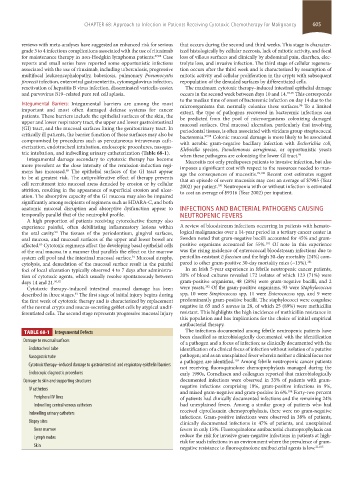
                      TABLE 68-1    Integumental Defects                   The infections documented among febrile neutropenic patients have
                                                                          been classified as microbiologically documented with the identification
                    Damage to mucosal surfaces                            of a pathogen and a focus of infection; as clinically documented with the
                      Endotracheal tube                                   identification of a clinical focus of infection without isolation of a putative
                      Nasogastric tube                                    pathogen; and as an unexplained fever wherein neither a clinical focus nor
                                                                          a pathogen are identified.  Among febrile neutropenic cancer patients
                                                                                            103
                      Cytotoxic therapy–induced damage to gastrointestinal and respiratory epithelial barriers
                                                                          not receiving fluoroquinolone chemoprophylaxis managed during the
                      Endoscopic diagnostic procedures                    early 1990s, Cornelissen and colleagues reported that microbiologically
                    Damage to skin and supporting structures              documented  infections were observed in  33% of patients with gram-
                                                                          negative infections comprising 18%, gram-positive infections in 9%,
                      IV catheters
                                                                          and mixed gram-negative and gram-positive in 6%.  Forty-two percent
                                                                                                              104
                        Peripheral IV lines                               of patients had clinically documented infections and the remaining 24%
                        Indwelling central venous catheters               had unexplained fevers. Among a similar group of patients who had
                                                                          received ciprofloxacin chemoprophylaxis, there were no gram-negative
                      Indwelling urinary catheters
                                                                          infections. Gram-positive infections were observed in 38% of patients,
                      Biopsy sites                                        clinically documented infections in 47% of patients, and unexplained
                       Bone marrow                                        fevers in only 15%. Fluoroquinolone antibacterial chemoprophylaxis can
                       Lymph nodes                                        reduce the risk for invasive gram-negative infections in patients at high-
                                                                          risk for such infections in an environment where the prevalence of gram-
                       Skin
                                                                          negative resistance to fluoroquinolone antibacterial agents is low. 21,105


            section05_c61-73.indd   605                                                                                1/23/2015   12:48:04 PM

