


Page 871 - Hall et al (2015) Principles of Critical Care-McGraw-Hill
P. 871
602     PART 5: Infectious Disorders


                                                                 Cancer patient
                                                             New onset of critical illness


                                                            Assessment for ICU admission


                              Premorbid PS poor (ECOG >2)   Premorbid PS good (ECOG  2)  New cancer diagnosis
                              Cancer not in control/remission  Cancer in control/remission or  Candidate for primary anticancer
                              Failure of anticancer treatment     stable                 treatment


                              ICU admission not recommended  Trial of ICU-based supportive  ICU admission recommended
                              Symptom control/palliative care is     care                   Resuscitation
                                recommended                                                 Mechanical ventilation
                                                                                            Vasopressor therapy
                                                                                            Antimicrobial therapy
                                                                                            Antineoplastic therapy
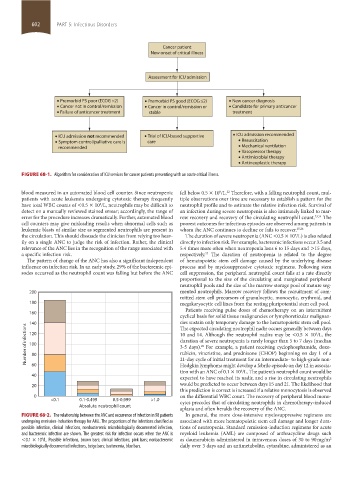
                 FIGURE 68-1.  Algorithm for consideration of ICU services for cancer patients presenting with an acute critical illness.


                 blood measured in an automated blood cell counter. Since neutropenic   fell below 0.5 × 10 /L.  Therefore, with a falling neutrophil count, mul-
                                                                                       22
                                                                                     9
                 patients with acute leukemia undergoing cytotoxic therapy frequently   tiple observations over time are necessary to establish a pattern for the
                 have total WBC counts of <0.5 × 10 /L, neutrophils may be difficult to   neutrophil profile and to estimate the relative infection risk. Survival of
                                            9
                 detect on a manually reviewed stained smear; accordingly, the range of   an infection during severe neutropenia is also intimately linked to mar-
                 error for the procedure increases dramatically. Further, automated blood   row recovery and recovery of the circulating neutrophil count. 23,24  The
                 cell counters may give misleading results when abnormal cells such as   poorest outcomes for infectious episodes are observed among patients in
                 leukemic blasts of similar size as segmented neutrophils are present in   whom the ANC continues to decline or fails to recover. 25,26
                 the circulation. This should dissuade the clinician from relying too heav-  The duration of severe neutropenia (ANC <0.5 × 10 /L) is also related
                                                                                                              9
                 ily on a single ANC to judge the risk of infection. Rather, the clinical   directly to infection risk. For example, bacteremic infections occur 3.5 and
                 relevance of the ANC lies in the recognition of the range associated with   5.4 times more often when neutropenia lasts 6 to 15 days and >15 days,
                 a specific infection risk.                            respectively.  The duration of neutropenia is related to the degree
                                                                                27
                   The pattern of change of the ANC has also a significant independent   of hematopoietic stem cell damage caused by the underlying disease
                 influence on infection risk. In an early study, 29% of the bacteremic epi-  process and by myelosuppressive cytotoxic regimens. Following stem
                 sodes occurred as the neutrophil count was falling but before the ANC   cell suppression, the peripheral neutrophil count falls at a rate directly
                                                                       proportional to the size of the circulating and marginated peripheral
                                                                       neutrophil pools and the size of the marrow storage pool of mature seg-
                    200                                                mented neutrophils. Marrow recovery follows the recruitment of com-
                                                                       mitted stem cell precursors of granulocytic, monocytic, erythroid, and
                    180                                                megakaryocytic cell lines from the resting pluripotential stem cell pool.
                                                                         Patients receiving pulse doses of chemotherapy on an intermittent
                    160
                                                                       cyclical basis for solid tissue malignancies or lymphoreticular malignan-
                    140                                                cies sustain only temporary damage to the hematopoietic stem cell pool.
                   Number of infections  100                           10 and 14. Although the neutrophil nadirs may be <0.5 × 10 /L, the
                                                                       The expected circulating neutrophil nadir occurs generally between days
                    120
                                                                                                                     9
                                                                       duration of severe neutropenia is rarely longer than 5 to 7 days (median
                                                                       3-5 days).  For example, a patient receiving cyclophosphamide, doxo-
                                                                              28
                                                                       rubicin, vincristine, and prednisone (CHOP) beginning on day 1 of a
                     80
                                                                       21-day cycle of initial treatment for an intermediate- to high-grade non-
                     60
                                                                       Hodgkin lymphoma might develop a febrile episode on day 12 in associa-
                                                                       tion with an ANC of 0.1 × 10 /L. The patient’s neutrophil count would be
                                                                                            9
                     40                                                expected to have reached its nadir, and a rise in circulating neutrophils
                     20                                                would be predicted to occur between days 15 and 21. The likelihood that
                                                                       this prediction is correct is increased if a relative monocytosis is observed
                     0                                                 on the differential WBC count. The recovery of peripheral blood mono-
                           <0.1      0.1-0.499  0.5-0.999    >1.0      cytes precedes that of circulating neutrophils in chemotherapy-induced
                                     Absolute neutrophil count
                                                                       aplasia and often heralds the recovery of the ANC.
                 FIGURE 68-2.  The relationship between the ANC and occurrence of infection in 98 patients   In  general,  the  more  dose-intensive  myelosuppressive  regimens  are
                 undergoing remission-induction therapy for AML. The proportions of the infections classified as   associated with more hematopoietic stem cell damage and longer dura-
                 possible infection, clinical infections, nonbacteremic microbiologically documented infection,   tions of neutropenia. Standard remission-induction regimens for acute
                 and bacteremic infection are shown. The greatest risk for infection occurs when the ANC is     myeloid leukemia (AML) are composed of anthracycline drugs such
                                                                                                                          2
                        9
                 <0.1 × 10 /L. Possible infections, brown bars; clinical infections, pink bars; nonbacteremic   as daunorubicin administered in intravenous doses of 30 to 90 mg/m
                 microbiologically documented infections, beige bars; bacteremia, blue bars.  daily over 3 days and an antimetabolite, cytarabine, administered as an


            section05_c61-73.indd   602                                                                                1/23/2015   12:48:03 PM

