


Page 984 - Hall et al (2015) Principles of Critical Care-McGraw-Hill
P. 984
CHAPTER 77: Management of the Critically Ill Traveler  715


                    Severe (including cerebral) malaria, meningococcal meningitis and  sepsis,   as based on the ARDS Network algorithm should be used in all causes as
                    dengue fever, viral hemorrhagic fevers (VHF) (eg, Ebola, Marburg), severe   it has been proven to lower mortality in patients with ARDS. Initial tidal
                    coronaviruses (SARS and MERS-CoV), influenza, plague, and tularemia   volumes of 6 mL/kg ideal body weight should be employed and lowered
                    are lethal pathogens causing rapid multiorgan system failure in a traveler   if the plateau pressures remain elevated above 30 cm H O. Higher levels
                                                                                                                 2
                    and will require rapid recognition for both therapeutic and protective mea-  of positive end-expiratory pressure (PEEP) should also be employed, par-
                    sures, particularly with highly contagious diseases such as viral hemorrhagic   ticularly if the Pa O 2 /Fi O 2  remains low. 19,20  Other maneuvers or modalities,
                    fever, influenza, plague, and severe coronaviruses (MERS-CoV). 1,6,7,9,11,16-18    including prone positioning or nonconventional forms of   mechanical
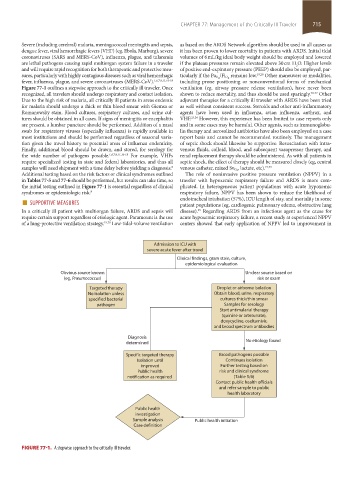
                    Figure 77-1 outlines a stepwise approach to the critically ill traveler. Once   ventilation (eg, airway pressure release ventilation), have never been
                    recognized, all travelers should undergo respiratory and contact isolation.   shown to reduce mortality, and thus should be used sparingly. 20-22  Other
                    Due to the high risk of malaria, all critically ill patients in areas endemic   adjuvant therapies for a critically ill traveler with ARDS have been tried
                    for malaria should undergo a thick or thin blood smear with Giemsa or   as well without consistent success. Steroids and other anti-inflammatory
                    Romanowsky stain. Blood cultures, respiratory cultures, and urine cul-  agents  have been  used  in  influenza,  avian influenza, anthrax,  and
                    tures should be obtained in all cases. If signs of meningitis or encephalitis   VHF. 23,24  However, this experience has been limited to case reports only
                    are present, a lumbar puncture should be performed. Addition of a nasal   and in some cases may be harmful. Other agents, such as immunoglobu-
                    swab for respiratory viruses (especially influenza) is rapidly available in   lin therapy and aerosolized antibiotics have also been employed on a case
                    most institutions and should be performed regardless of seasonal varia-  report basis and cannot be recommended routinely. The management
                    tion given the travel history to potential areas of influenza endemicity.   of septic shock should likewise be supportive. Resuscitation with intra-
                    Finally, additional blood should be drawn, and stored, for serology for   venous fluids, colloid, blood, and subsequent vasopressor therapy, and
                    the wide number of pathogens possible. 1,6,7,9,11,16-18  For example, VHFs   renal replacement therapy should be administered. As with all patients in
                    require specialized testing in state and federal laboratories, and thus all   septic shock, the effect of therapy should be measured closely (eg, central
                    samples will need shipment with a time delay before yielding a diagnosis.    venous catheter, mixed Sv O 2 , lactate, etc). 21,23
                                                                       8
                    Additional testing based on the risk factors or clinical syndromes outlined   The role of noninvasive positive pressure ventilation (NPPV) in a
                    in Tables 77-5 and 77-6 should be performed, but results can take time, so   traveler with hypoxemic respiratory failure and ARDS is more com-
                    the initial testing outlined in Figure 77-1 is essential regardless of clinical   plicated. In heterogeneous patient populations with acute hypoxemic
                    syndromes or epidemiologic risk. 8                    respiratory failure, NPPV has been shown to reduce the likelihood of
                        ■  SUPPORTIVE MEASURES                            endotracheal intubation (57%), ICU length of stay, and mortality in some
                                                                          patient populations (eg, cardiogenic pulmonary edema, obstructive lung
                    In a critically ill patient with multiorgan failure, ARDS and sepsis will   disease).  Regarding ARDS from an infectious agent as the cause for
                                                                                25
                    require certain support regardless of etiologic agent. Paramount is the use   acute hypoxemic respiratory failure, a recent study at experienced NPPV
                    of a lung-protective ventilation strategy. 19,20  Low-tidal-volume ventilation   centers showed that early application of NPPV led to improvement in


                                                                 Admission to ICU with
                                                              severe acute fever after travel
                                                                        Clinical findings, gram stain, culture,
                                                                           epidemiological evaluation
                                 Obvious source known                                           Unclear source based on
                                  (eg, Pneumococcus)                                                risk or exam
                                           Targeted therapy                           Droplet or airborne isolation
                                          No isolation unless                        Obtain blood, urine, respiratory
                                          specified bacterial                          cultures thick/thin smear
                                             pathogen                                    Samples for serology
                                                                                       Start antimalarial therapy
                                                                                        (quinine or artesunate),
                                                                                       doxycycline, oseltamivir,
                                                                                     and broad spectrum antibodies

                                                        Diagnosis
                                                       determined                               No etiology found

                                                       Specific targeted therapy       Broad pathogens possible
                                                           Isolation until               Continues isolation
                                                            improved                   Further testing based on
                                                           Public health               risk and clinical syndrome
                                                        notification as required            (Table 5/6)
                                                                                      Contact public health officials
                                                                                       and refer sample to public
                                                                                          health laboratory

                                                          Public health
                                                          investigation
                                                         Sample analysis       Public health initiation
                                                          Case definition


                    FIGURE 77-1.  A stepwise approach to the critically ill traveler.


            section05_c74-81.indd   715                                                                                1/23/2015   12:37:32 PM

