


Page 152 - Psychology of Wounds and Wound Care in Clinical Practice ( PDFDrive )
P. 152
Diabetic Foot Ulcer (DFU)  127

            Psychosocial risks  Potential intervention tools  Intervention goals

             Behavioural factors:
               Inactivity
                                                     Activity monitoring
              Irregular activity                    Activity scheduling
              Strategic non-    Information provision
               adherences
                                  Increasing self-
                                   efficacy
             Emotional factors:
                                                     Positive reframing
               Depression
                                                    Behavioural activation
                Blame                                Increase activity
                Guilt            Social engagement
                                  Risk awareness
             Cognitive factors:                      Positive reframing
              Coping strategies                     Cognitive restructuring
                                  Goal setting
                                 Planning homework
                                                    Cognitive restructuring
              Social factors:     Behavioural      Encourage socialisation
                Gender
              Social isolation    experiments        through activity
                                                      scheduling

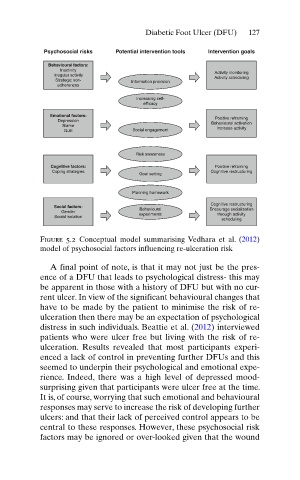
             Figure  5.2    Conceptual model summarising Vedhara et al. ( 2012 )
           model of psychosocial factors influencing re-ulceration risk
               A final point of note, is that it may not just be the pres-
           ence of a DFU that leads to psychological distress- this may
           be apparent in those with a history of DFU but with no cur-
           rent ulcer. In view of the significant behavioural changes that
           have to be made by the patient to minimise the risk of re-
           ulceration then there may be an expectation of psychological
           distress in such individuals. Beattie et al. (  2012 ) interviewed
           patients who were ulcer free but living with the risk of re-
           ulceration. Results revealed that most participants experi-
           enced a lack of control in preventing further DFUs and this
           seemed to underpin their psychological and emotional expe-
           rience. Indeed, there was a high level of depressed mood-
           surprising given that participants were ulcer free at the time.
           It is, of course, worrying that such emotional and behavioural
           responses may serve to increase the risk of developing further
           ulcers: and that their lack of perceived control appears to be
           central to these responses. However, these psychosocial risk
           factors may be ignored or over-looked given that the wound

