


Page 104 - Clinical Anatomy
P. 104
ECA2  7/18/06  6:42 PM  Page 89


                                                                    The gastrointestinal tract  89


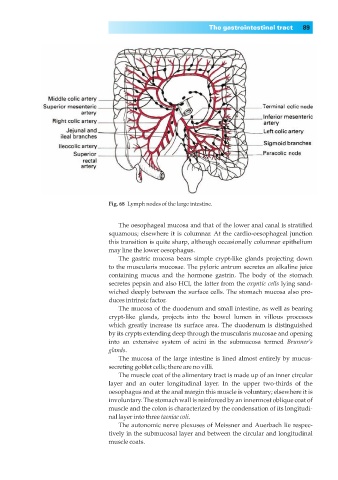
                                        Fig. 68◊Lymph nodes of the large intestine.

                                          The oesophageal mucosa and that of the lower anal canal is stratified
                                        squamous; elsewhere it is columnar. At the cardio-oesophageal junction
                                        this transition is quite sharp, although occasionally columnar epithelium
                                        may line the lower oesophagus.
                                          The gastric mucosa bears simple crypt-like glands projecting down
                                        to the muscularis mucosae. The pyloric antrum secretes an alkaline juice
                                        containing mucus and the hormone gastrin. The body of the stomach
                                        secretes pepsin and also HCl, the latter from the oxyntic cells lying sand-
                                        wiched deeply between the surface cells. The stomach mucosa also pro-
                                        duces intrinsic factor.
                                          The mucosa of the duodenum and small intestine, as well as bearing
                                        crypt-like glands, projects into the bowel lumen in villous processes
                                        which greatly increase its surface area. The duodenum is distinguished
                                        by its crypts extending deep through the muscularis mucosae and opening
                                        into an extensive system of acini in the submucosa termed  Brunner’s
                                        glands.
                                          The mucosa of the large intestine is lined almost entirely by mucus-
                                        secreting goblet cells; there are no villi.
                                          The muscle coat of the alimentary tract is made up of an inner circular
                                        layer and an outer longitudinal layer. In the upper two-thirds of the
                                        oesophagus and at the anal margin this muscle is voluntary; elsewhere it is
                                        involuntary. The stomach wall is reinforced by an innermost oblique coat of
                                        muscle and the colon is characterized by the condensation of its longitudi-
                                        nal layer into three taeniae coli.
                                          The autonomic nerve plexuses of Meissner and Auerbach lie respec-
                                        tively in the submucosal layer and between the circular and longitudinal
                                        muscle coats.

