


Page 157 - Clinical Anatomy
P. 157
ECA2  7/18/06  6:43 PM  Page 142


                 142  The abdomen and pelvis


                   The ureter is readily infiltrated by lateral extension of a carcinoma of the
                uterus; bilateral hydronephrosis with uraemia is a frequent mode of termi-
                nation of this disease.
                   The close relationship of ureter to the lateral fornix is best appreciated
                by realizing that a ureteric stone at this site can be palpated on vaginal
                examination. (This is the answer to the examination question: ‘When can a
                stone in the ureter be felt?’)


                Blood supply
                The uterine artery (from the internal iliac) runs in the base of the broad liga-
                ment and crosses above and at right angles to the ureter to reach the uterus
                at the level of the internal os. The artery then ascends in a tortuous manner
                alongside the uterus, supplying the corpus, and then anastomoses with the
                ovarian artery. The uterine artery also gives off a descending branch to the
                cervix and branches to the upper vagina. The veins accompany the arteries
                and drain into the internal iliac veins, but they also communicate via the
                pelvic plexus with the veins of the vagina and bladder.


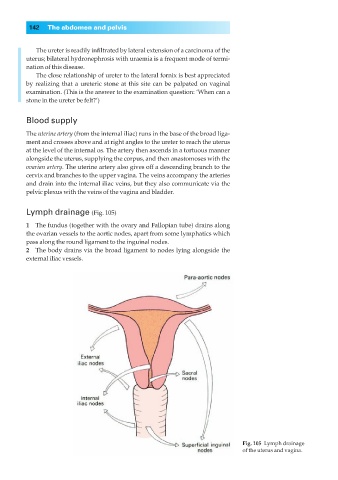
                Lymph drainage (Fig. 105)
                1◊◊The fundus (together with the ovary and Fallopian tube) drains along
                the ovarian vessels to the aortic nodes, apart from some lymphatics which
                pass along the round ligament to the inguinal nodes.
                2◊◊The body drains via the broad ligament to nodes lying alongside the
                external iliac vessels.


                                                                              Fig. 105◊Lymph drainage
                                                                              of the uterus and vagina.

